
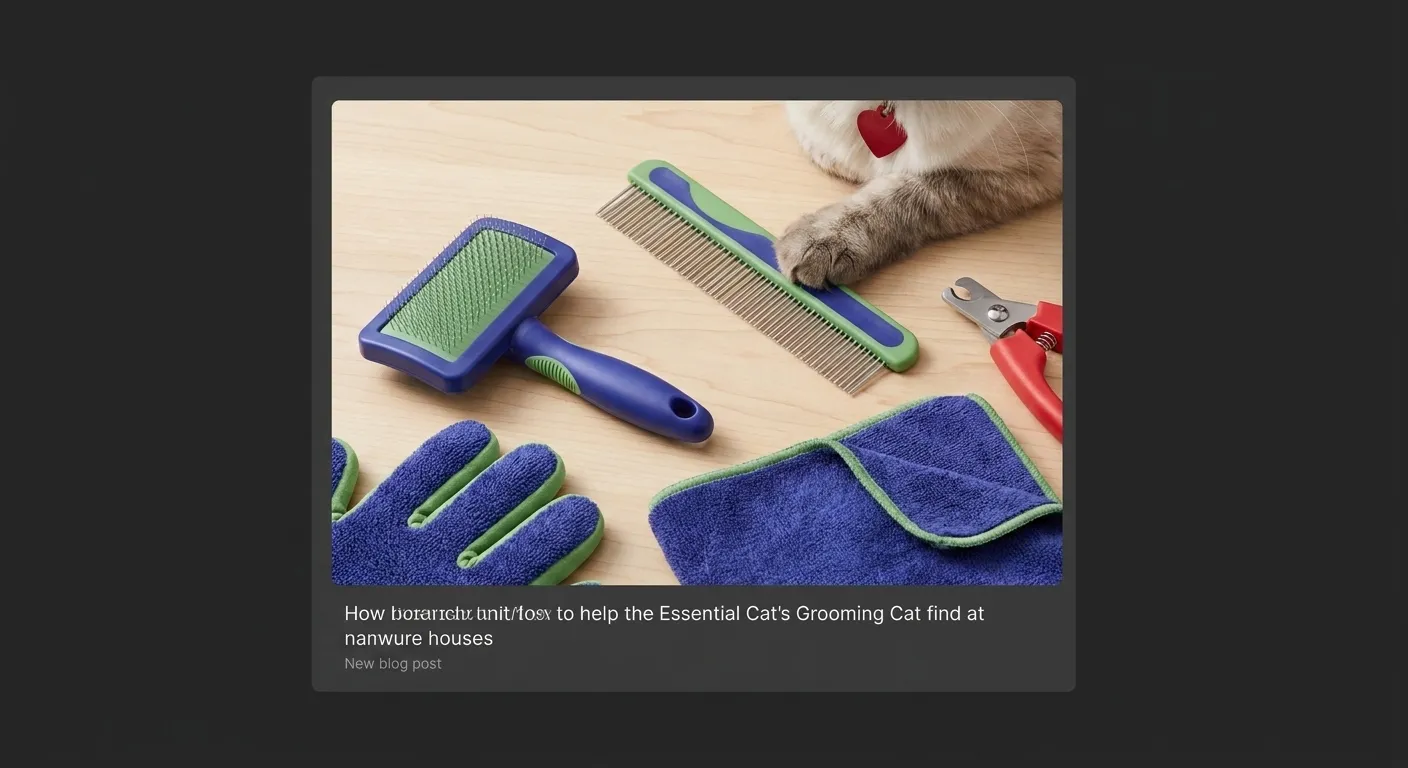
Essential cat grooming tools should match the work you can comfortably and appropriately do for your individual cat. You do not need a large salon kit to begin. Start by identifying the intended task, obtaining a suitable demonstration and buying equipment whose purpose you understand. A brush that works well for someone else’s cat may be an unsuitable choice for yours.
This is general education, not medical or veterinary advice. Ask your veterinary team about health concerns and which home-care tasks are appropriate. A competent cat groomer can help demonstrate coat-care tools. The guide does not recommend home treatment, cutting out mats or restraining a struggling cat to complete a purchase-inspired routine.
Define the job before shopping
Write down the immediate task in plain language: help with routine loose coat, learn gentle brushing or prepare for a professionally demonstrated claw-care task. Separate these jobs. Buying a kit containing every category does not establish that your cat needs every service. Face, ear and dental care should follow appropriate individual instructions rather than being automatically added to a coat session.
Describe the coat and any handling difficulty to the professional advising you. Ask whether a simple brush, comb or another tool is suitable, and which areas you should leave alone. If the coat is already matted or the cat seems uncomfortable, seek assessment before shopping for equipment intended to solve the problem yourself.
Compare brushes by contact, not promises
Look at the surface that actually contacts the coat. Bristles, pins and rubber projections feel different, and the label alone cannot tell you what your cat will accept. Ask someone competent to show how the proposed brush is held and used. Inspect the tool for rough edges, damaged pins or loose parts before it goes near your cat.
Do not buy solely because a package promises a shiny coat, fewer hairballs or a healthier pet. These claims do not replace suitability for your cat. The useful questions are concrete: which task does the brush perform, how much contact is appropriate, and when should you stop? Keep the receipt and check the return policy before testing an unfamiliar option.
Give combs a clear purpose
A comb may be recommended as part of coat care, but different tooth spacing and designs serve different purposes. Ask which one suits the coat and how to recognize resistance without pulling. A tool sold for detangling is not permission to force it through a knot or to keep working because the hair has not yet become tidy.
The ASPCA’s guidance on matting advises professional or veterinary help and warns against cutting mats out with scissors. Treat a resistant mat as a separate problem, rather than a reason to buy a sharper home tool. Tell the professional where it is and whether the cat appears uncomfortable, so the next step can be assessed appropriately.
Check the handle as carefully as the head
Try holding the tool without the cat present. Can you maintain a light, comfortable grip and see where the working surface will be? A handle that slips or a tool too large to maneuver may make an otherwise sensible task difficult. Product photographs rarely show how a particular owner’s hands will fit the handle.
If several household members will use it, check that everyone understands the same demonstrated method. Do not assume that owning one familiar brush means another person knows how to use it. Keep a short instruction note alongside the kit: permitted areas, ordinary purpose and the stopping point. This is more useful than an unexplained pile of equipment.
Make claw tools an optional, separate decision
Before purchasing nail clippers, ask your veterinary team whether home trimming is appropriate and request a demonstration with your cat. Ask which type and size you can control, how the claw’s sensitive area is identified and when a professional appointment is preferable. Do not infer suitability from a claim that a clipper is designed for all cats.
Buying clippers should not create an obligation to use them immediately or to finish all claws at once. If you cannot see clearly, feel uncertain or encounter resistance, stop and ask for help. This equipment guide does not prescribe a cutting angle, amount, schedule or bleeding treatment. Obtain individualized instructions before attempting the task.
Keep cleaning products outside the automatic starter list
Shampoo, conditioner, eye wipes and ear cleaners are not interchangeable necessities for every cat. Ask whether a specific product is needed and which area and method it is intended for. Labels such as natural, hypoallergenic or tearless do not establish that a product suits your cat or can be applied wherever you choose.
If a product is recommended, retain the original packaging and instructions. Check its intended species, use limits, storage requirements and expiry information where provided. Do not decant several products into identical unlabelled containers. A new eye, ear or skin concern needs veterinary discussion rather than a shopping-based attempt to remove its visible signs.
Resist advanced equipment without an assessed need
Electric clippers, bladed dematting tools and restraint devices should not be the next automatic step after buying a brush. Their presence in a starter bundle does not make a home haircut appropriate. Ask a qualified professional to assess work that exceeds ordinary comfortable coat care, particularly when mats or difficult handling are involved.
A grooming table, arm or hammock cannot guarantee that a cat will be safe or relaxed. This guide does not teach their use. If your routine seems to require immobilizing the cat, reconsider the plan with the veterinary team or an appropriately qualified behavior professional. More equipment is not always the solution to an unsuitable task.
Introduce one tool at a time
Cats Protection’s grooming guidance recommends gradual introduction and minimal restraint. Prepare a quiet setting and allow the cat to become familiar with the tool without insisting on a complete groom. Use the demonstrated approach for a small permitted task, and stop if the cat is uncomfortable or moves away.
Do not introduce several new products and a new handling method together. If the cat dislikes the experience, it becomes difficult to identify which part needs changing. Record what you actually tried: brush model, area and response. Discuss recurring difficulty with your professional adviser rather than using a purchase review as a universal behavior plan.
Buy with maintenance in mind
Read the manufacturer’s cleaning instructions before choosing the tool. Some parts may be washable while others require a different method. Check whether replacement components are available and whether the working surface can be inspected easily. A product that is awkward to maintain may be a poor choice even if its package appears impressive.
After use, remove loose hair and follow the specified cleaning and drying method. Do not invent a disinfectant mixture or assume every brush tolerates soaking. Store clean equipment securely, away from chewing or unsupervised play. Inspect it again before the next session and replace damaged parts according to the manufacturer rather than continuing with rough or unstable contact surfaces.
Use a modest comparison sheet
For each candidate, note its purpose, size, working surface, cleaning method, purchase cost and return conditions. Add the professional’s recommendation and any limitation. This makes comparisons specific. A more expensive item may have useful features, but price alone does not prove a gentler experience or a longer usable life.
Start with the smallest suitable set and add equipment only when you understand the new task. Ask for help with unresolved coat or handling problems. The ASPCA’s cat grooming guidance provides further general context, while individual instruction supplies the limits that a general shopping list cannot. Your essential cat grooming tools should support comfortable care you understand, rather than a checklist of products you feel obliged to use.
