
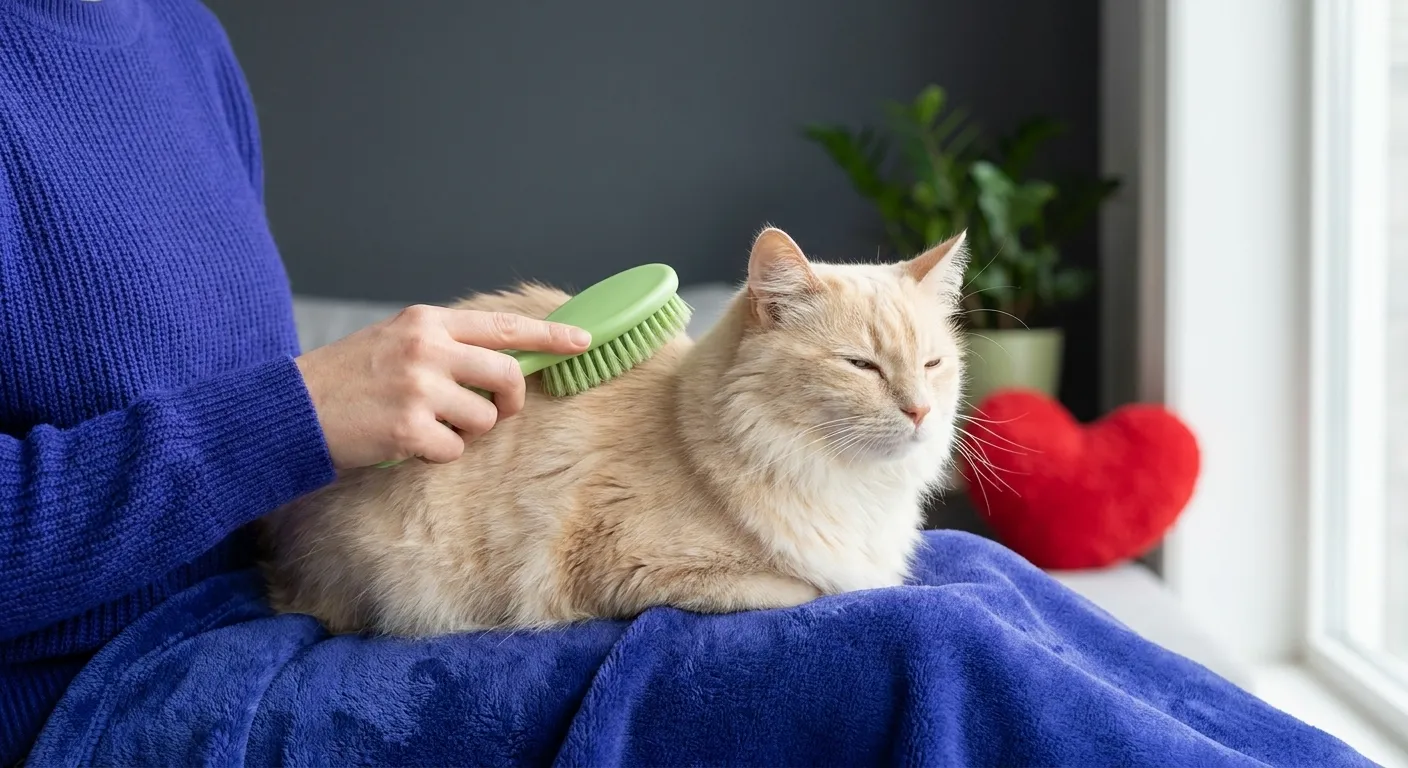
If brushing keeps becoming difficult, review the specific point where the routine breaks down. Gentle cat brushing techniques depend on the tool, the coat area and the individual cat’s comfort, rather than on a promise that patience alone will make every session pleasant. Write down what happens before changing the whole routine or buying several new grooming products.
This is general education, not medical or veterinary advice. Ask your veterinary team about discomfort, new changes or appropriate home care. A competent cat groomer can demonstrate tools and ordinary coat work. This guide does not prescribe treatment, sedation, forced restraint or home removal of mats. A practical review may lead to professional help rather than more brushing.
Problem: the brush catches at one location
Stop working that location instead of repeating the same stroke with greater pressure. Note where the tool caught and whether the cat seemed uncomfortable. You do not need to pull apart the hair to obtain a perfect description. A catch may require an assessment of the coat and an explanation of what home care is appropriate.
The ASPCA’s matting guidance warns against cutting mats with scissors and directs owners toward professional or veterinary help. Avoid treating a knot as a test of persistence. Do not add kitchen powders or a sharper tool because an ordinary brush could not pass through. Ask which work should be arranged professionally and which maintenance you can then manage.
Problem: the cat leaves as soon as the tool appears
Separate familiarization from actual brushing. Prepare a quiet setting and let the cat encounter the tool without being captured for a full session. Cats Protection’s grooming guidance recommends introducing grooming gradually and minimizing restraint. Ask your adviser to show a suitable introduction for the individual cat if you are uncertain where to begin.
Do not chase the cat with the brush or assume that a preferred treat makes compulsory contact acceptable. Keep a note of the situation: location, tool and what happened before the cat moved away. If the difficulty recurs, that description helps your veterinary team or an appropriately qualified behavior professional review the plan.
Problem: a familiar task suddenly becomes unwelcome
A change in tolerance needs attention rather than a stronger hold. Contact your veterinary team if the cat appears uncomfortable or behavior has changed. Explain which task was previously manageable and what is different now. Do not conclude that the cat is simply stubborn or that replacing the brush will necessarily resolve the issue.
A general article cannot distinguish every cause of reluctance or assess pain from a short description. Avoid repeated attempts intended to confirm whether the response is real. Stop the unsuitable task and seek advice according to the concern’s urgency. A veterinary assessment may be the appropriate next step before ordinary coat care is resumed.
Problem: the tool feels awkward in your hand
Try holding it without the cat present and inspect the handle, size and working surface. Ask a groomer to demonstrate the grip and motion for the intended task. A brush that looks small in a photograph may be difficult for you to maneuver, and a tool that works for another owner may not fit your hands.
Check for damaged pins, rough edges or loose parts. Put faulty equipment aside rather than trying to compensate with a different angle. If a replacement is needed, compare the actual purpose, size, maintenance instructions and return conditions. Do not use price or popularity as proof that a tool will be more comfortable for this cat.
Problem: one easy area leads to a difficult whole-coat session
Keep the areas separate in your plan. Comfort with brushing the back does not establish that the cat will accept belly, tail, face or paw handling. Ask which areas are appropriate for home care and how each should be approached. Do not roll or immobilize the cat to make an inaccessible section fit the timetable.
Draw a simple coat map on paper and mark the sections you can comfortably manage under the demonstrated method. Mark areas left untouched without labelling them failures. If an area needs work you cannot do, arrange suitable help. The map makes the gap clear and avoids assuming that a partial brush-through was a complete groom.
Problem: sessions keep getting longer
Review the goal before starting. Choose one permitted task rather than trying to make up for every missed session at once. Have the required tool ready and leave unrelated grooming products packed away. If the cat becomes uncomfortable, stop instead of extending the session because the coat is only partly finished.
Ask your adviser about a suitable routine for the actual coat and the cat’s tolerance. There is no universal number of strokes or minutes that this article can certify. Record the task completed and the stopping point. Those details are more useful than comparing your cat with an online video that shows an unusually tolerant individual.
Problem: several household members use different methods
Create one short care note based on the professional demonstration. Include the approved tool, task, permitted areas and stopping rule. Make sure everyone understands it rather than assuming that one person’s experience transfers automatically. Keep advanced tools and cleaning products separate when they are not part of the agreed session.
Use a shared log to record what was actually done. Without it, two people may repeat the same task or each assume the other brushed an area. Write observations in ordinary language instead of a diagnosis. If a change needs discussion, contact the veterinary team with the combined record rather than adding an improvised product to the kit.
Problem: grooming changes into shopping for remedies
Avoid responding to reluctance with a collection of calming products, shampoos or supplements. Ask for professional assessment of the actual difficulty. A label describing an item as natural or gentle does not determine that it fits your cat’s needs, and this guide does not recommend medication or a treatment for coat or behavior changes.
If a professional recommends a specific product, retain the original instructions and understand its intended use. Do not substitute another formulation because its name sounds similar. Keep medical questions with the veterinary team and practical tool questions with an appropriately experienced adviser. Clarifying the job usually helps more than buying products whose role you cannot explain.
Problem: equipment is neglected between sessions
Remove loose hair and follow the manufacturer’s cleaning and drying instructions. Inspect contact surfaces regularly and replace damaged parts as directed. Store the equipment securely so it is not used as a toy. Do not assume that every brush or comb can be soaked or cleaned with the same household chemical.
Note any maintenance issue before the next session. If the tool no longer feels like the one demonstrated, stop using it and obtain appropriate advice or a replacement. A good handling plan can be undermined by damaged equipment. Maintenance should be a concrete step on the care note, rather than an unexamined assumption that the brush is always ready.
Build a revised plan from the evidence
Choose the next action that matches the problem: a tool demonstration, a smaller coat task, clarification of household instructions or veterinary assessment. Change one ordinary variable at a time when professional advice supports doing so. Keep the outcome description modest; comfortable contact with a small area is different from an entire grooming routine becoming easy.
The ASPCA’s cat grooming tips offer further general context. Your individual plan supplies the limits and methods that a general troubleshooting guide cannot. Gentle cat brushing techniques are practical when they remain responsive to the coat and the cat. Keep the task understandable, stop at difficulty and use professional help when the work exceeds comfortable home care.
