
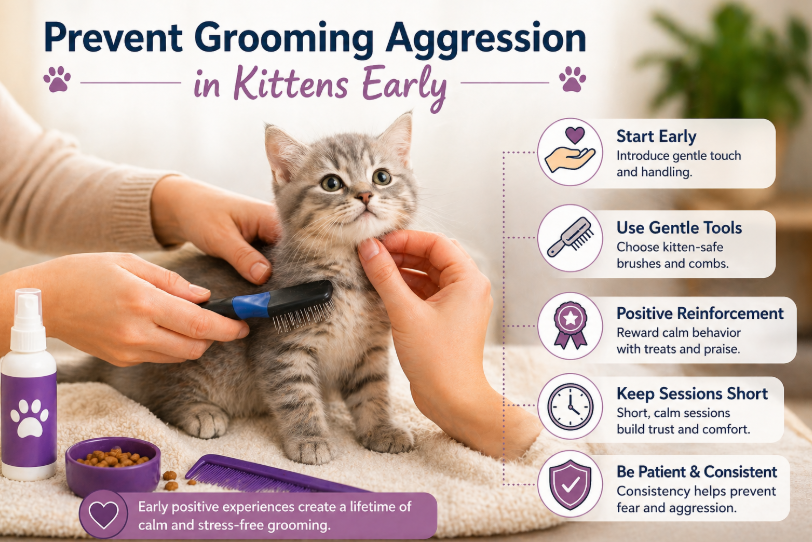
Building positive habits from the beginning is the most effective way to prevent grooming aggression kittens may develop later in life. While kittens are naturally curious and playful, they are also highly sensitive to new experiences, including grooming. If early sessions feel stressful or uncomfortable, negative associations can form quickly. However, when introduced correctly, grooming becomes a normal and even enjoyable part of their routine.
Understanding how to prevent grooming aggression kittens display starts with recognizing that early experiences shape long-term behavior. Gentle handling, patience, and consistency all play a key role. By focusing on comfort and trust, you can help your kitten feel safe during grooming, which reduces the chances of defensive reactions as they grow.
Why Early Grooming Habits Matter
The early weeks of a kitten’s life are critical for learning and adaptation. During this stage, kittens are more open to new experiences, which makes it easier to prevent grooming aggression kittens might otherwise develop. If grooming is introduced gradually and positively, it becomes part of their normal routine rather than something to fear.
On the other hand, rushing the process or handling them roughly can lead to lasting resistance. Even one negative experience can make future sessions more difficult. Therefore, taking a gentle approach from the beginning helps build confidence and trust.
Additionally, early grooming prevents issues like matting and discomfort. When kittens become familiar with brushing and handling, they are less likely to react aggressively later. This foundation makes grooming easier throughout their lives.
Start With Gentle Handling And Touch
Before introducing grooming tools, focus on touch. One of the best ways to prevent grooming aggression kittens develop is by getting them comfortable with being handled. Gently pet your kitten in different areas, including the back, legs, and paws.
Short sessions work best. Keep interactions calm and positive, and always watch your kitten’s reactions. If they seem uncomfortable, pause and try again later. This approach helps your kitten feel in control and reduces stress.
Gradually, increase the duration of these sessions. As your kitten becomes more relaxed, they will begin to associate touch with comfort rather than fear. This step lays the groundwork for successful grooming in the future.
Introduce Grooming Tools Slowly
When you are ready to use tools, take a gradual approach to prevent grooming aggression kittens often develop from sudden exposure. Let your kitten sniff and explore the brush or comb before using it. This reduces fear and builds familiarity.
Start with soft brushes designed for sensitive coats. Use gentle strokes and focus on areas your kitten enjoys being touched. Keep sessions short and end on a positive note.
If your kitten reacts negatively, do not force the process. Instead, step back and reintroduce the tool later. Over time, this method helps your kitten accept grooming without stress or resistance.
Use Positive Reinforcement Consistently
Positive reinforcement is essential when you aim to prevent grooming aggression kittens may develop. Reward calm behavior with treats, gentle praise, or playtime. This creates a strong association between grooming and positive outcomes.
Timing is important. Offer rewards immediately after a calm response so your kitten understands what is being encouraged. Over time, your kitten will begin to expect rewards during grooming sessions.
Consistency strengthens this connection. When grooming always leads to something positive, your kitten becomes more cooperative. This makes it much easier to prevent grooming aggression kittens might otherwise show as they grow older.
Keep Grooming Sessions Short And Calm
Lengthy sessions can overwhelm young kittens. Therefore, keeping sessions brief is a key strategy to prevent grooming aggression kittens may develop from stress. Start with just a few minutes and gradually increase the time as your kitten becomes more comfortable.
Choose a quiet environment with minimal distractions. A calm setting helps your kitten stay relaxed and focused. Avoid sudden movements or loud noises that could startle them.
Additionally, watch for signs of discomfort. If your kitten becomes restless or tense, end the session before stress builds. This approach ensures that grooming remains a positive experience.
Build A Consistent Routine Early
Routine plays a powerful role when you want to prevent grooming aggression kittens often develop. Regular grooming sessions help your kitten understand what to expect. This predictability reduces anxiety and makes each session easier.
Try to groom your kitten at the same time each day or week. Consistency creates a sense of familiarity, which helps your kitten feel secure. Over time, grooming becomes a normal part of their routine.
Moreover, regular grooming prevents tangles and discomfort. When grooming is easy and pain-free, your kitten is less likely to resist. This makes it easier to maintain a calm and cooperative behavior.
Recognize Early Signs Of Discomfort
Even when you take the right steps, it is important to watch for early signs of stress. Learning to identify these signals helps you prevent grooming aggression kittens may develop if discomfort is ignored. Common signs include tail flicking, ear flattening, or sudden stillness.
If you notice these behaviors, pause the session and allow your kitten to relax. Ignoring these signs can lead to defensive reactions such as scratching or biting.
By responding early, you show your kitten that grooming is not something to fear. This builds trust and reduces the likelihood of aggressive behavior in the future.
Make Grooming A Bonding Experience
Grooming should not feel like a chore. Instead, it should be a bonding opportunity. When you focus on connection, you naturally prevent grooming aggression kittens may develop. Use a calm voice and gentle touch throughout the session.
Incorporate play before or after grooming to create a positive association. This helps your kitten see grooming as part of a fun and rewarding routine.
Additionally, stay patient and flexible. Every kitten is different, so adjust your approach based on their personality. Over time, this personalized method strengthens trust and improves cooperation.
Avoid Common Mistakes That Trigger Aggression
Certain mistakes can quickly undo your progress. To prevent grooming aggression kittens may develop, avoid forcing your kitten to stay still. Restraint can increase fear and lead to defensive behavior.
Using the wrong tools is another common issue. Brushes that pull or scratch can cause pain, making grooming unpleasant. Always choose tools designed for kittens and sensitive coats.
Skipping grooming for long periods can also create problems. When mats form, grooming becomes uncomfortable, which increases resistance. Regular, gentle sessions are far more effective.
Finally, never punish your kitten for reacting aggressively. This only increases fear and damages trust. Instead, focus on understanding and adjusting your approach.
When To Seek Additional Help
In some cases, extra support may be needed. If you struggle to prevent grooming aggression kittens display, consider consulting a veterinarian or professional groomer. They can provide guidance tailored to your kitten’s needs.
Behavioral issues may sometimes be linked to underlying health concerns. A professional evaluation ensures that your kitten is comfortable and healthy.
Seeking help early prevents problems from becoming more serious. It also ensures that your kitten develops positive grooming habits that last into adulthood.
Conclusion
Learning how to prevent grooming aggression kittens may develop is one of the most valuable steps you can take as a pet owner. By starting early, using gentle techniques, and focusing on positive experiences, you create a foundation of trust that lasts a lifetime.
Although grooming may seem challenging at first, patience and consistency make a significant difference. Small, thoughtful actions help your kitten feel safe and secure. Over time, grooming becomes a calm and natural part of their routine.
Ultimately, preventing aggression is not about control but about understanding. When your kitten feels comfortable, they are far more likely to cooperate. With the right approach, you can successfully prevent grooming aggression kittens often develop and enjoy a stress-free grooming experience together.
FAQ
- When should I start grooming my kitten?
Start grooming as early as possible, ideally when your kitten is a few weeks old. - How long should grooming sessions be for kittens?
Keep sessions short, around a few minutes, and gradually increase as they adjust. - What tools are best for young kittens?
Soft brushes and gentle combs designed for sensitive coats work best. - How can I calm my kitten during grooming?
Use treats, a calm voice, and gentle handling to create a relaxing experience. - What if my kitten already resists grooming?
Go back to basic handling, reintroduce tools slowly, and focus on positive reinforcement.
