
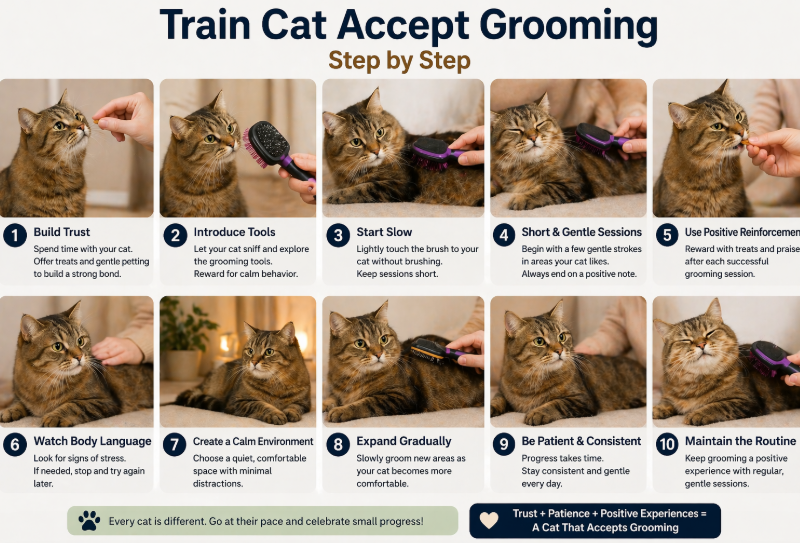
Learning how to train cat accept grooming is one of the most valuable skills you can develop as a cat owner. While grooming is essential for your cat’s health, many cats resist it because they feel uncomfortable, fearful, or out of control. However, with the right approach, patience, and consistency, you can gradually teach your cat to tolerate and even accept grooming as part of their routine.
Instead of forcing grooming sessions, the goal is to build trust and create positive associations. When you train cat accept grooming properly, you reduce stress, prevent aggressive reactions, and make grooming safer for both you and your pet. Over time, this step-by-step process transforms grooming from a struggle into a manageable and calm experience.
Understanding Why Cats Resist Grooming
Before you train cat accept grooming, it is important to understand why resistance happens. Cats are naturally independent and prefer to groom themselves. When someone else takes over, they may feel a loss of control.
In addition, unfamiliar tools, sensations, and handling can trigger anxiety. If your cat has had a negative grooming experience in the past, they may expect discomfort again. As a result, they react defensively before grooming even begins.
Moreover, sensitivity plays a role. Some cats are more sensitive to touch, especially in certain areas. Recognizing these factors helps you approach grooming with empathy. This understanding makes it easier to train cat accept grooming without creating fear or stress.
Start With Building Trust First
The first step to train cat accept grooming is building trust. Without trust, grooming will always feel threatening to your cat. Therefore, focus on creating positive interactions before introducing any grooming tools.
Spend time petting your cat gently in areas they enjoy. This helps them associate your touch with comfort rather than discomfort. In addition, observe how your cat reacts to handling. Understanding their preferences allows you to adjust your approach.
Consistency is important during this stage. Regular, calm interactions help your cat feel secure. Once your cat trusts you, it becomes much easier to train cat accept grooming in later steps.
Introduce Grooming Tools Gradually
To successfully train cat accept grooming, you must introduce tools slowly. Placing a brush directly on your cat without preparation often leads to resistance. Instead, allow your cat to inspect the tool first.
Let them sniff and explore the brush while offering treats. This creates a positive association. Over time, your cat becomes more comfortable with the presence of the tool.
Next, lightly touch the brush to your cat without brushing. Keep the interaction brief and calm. Reward your cat immediately after. This step helps reduce fear and prepares them for actual grooming. Gradual exposure is key when you train cat accept grooming effectively.
Begin With Short And Gentle Sessions
When you train cat accept grooming, starting small is essential. Long sessions can overwhelm your cat and undo progress. Instead, begin with just a few gentle strokes.
Focus on areas your cat is comfortable with, such as the back or shoulders. Avoid sensitive areas at first. This helps your cat feel relaxed and in control.
After a short session, reward your cat with a treat or praise. Ending on a positive note reinforces good behavior. As your cat becomes more comfortable, you can slowly increase the duration. This gradual approach makes it easier to train cat accept grooming without causing stress.
Use Positive Reinforcement Consistently
Positive reinforcement is one of the most effective ways to train cat accept grooming. Rewarding calm behavior helps your cat associate grooming with something enjoyable.
For example, give treats immediately after each successful interaction. This creates a clear connection between grooming and rewards. In addition, gentle praise and calm communication reinforce a sense of safety.
Timing is crucial. Rewards should be given right after calm behavior to strengthen the association. Over time, your cat begins to expect positive outcomes during grooming. This makes it easier to train cat accept grooming consistently.
Recognize And Respect Warning Signs
While you train cat accept grooming, it is important to watch for warning signs. Cats often communicate discomfort through body language before showing aggression.
For instance, tail flicking, flattened ears, or sudden tension indicate stress. If you notice these signs, stop immediately. Continuing grooming at this point can lead to negative experiences.
Respecting your cat’s signals builds trust. It shows them that grooming does not have to be overwhelming. Over time, this reduces anxiety and improves cooperation. Learning to pause at the right moment is essential when you train cat accept grooming.
Create A Calm Grooming Environment
Environment plays a major role when you train cat accept grooming. A noisy or busy setting can increase stress and make your cat more resistant. Therefore, choose a quiet and familiar space.
Soft lighting and minimal distractions help your cat stay relaxed. In addition, grooming at the same time each day creates a predictable routine. This consistency helps your cat feel secure.
Your behavior also affects the environment. Moving slowly and speaking softly reassures your cat. Sudden movements can trigger fear. By creating a calm atmosphere, you make it easier to train cat accept grooming successfully.
Gradually Expand Grooming Areas
Once your cat becomes comfortable, you can expand grooming to other areas. When you train cat accept grooming, it is important to move slowly and avoid rushing.
Start by introducing slightly more sensitive areas, such as the sides or chest. Use the same gentle technique and reward calm behavior. If your cat shows discomfort, return to areas they tolerate well.
Over time, your cat will build tolerance for a wider range of grooming. This gradual progression helps maintain positive experiences. Expanding slowly ensures you continue to train cat accept grooming without setbacks.
Be Patient With Progress
Patience is essential when you train cat accept grooming. Every cat learns at a different pace. Some may adjust quickly, while others need more time.
Avoid comparing your cat to others. Focus on small improvements and celebrate progress. Even short, calm sessions are a step forward.
Consistency is more important than speed. Regular practice builds familiarity and confidence. Over time, your cat will become more comfortable with grooming. Staying patient ensures long-term success when you train cat accept grooming.
When To Seek Extra Help
In some cases, additional support may be needed when you train cat accept grooming. If your cat shows extreme aggression or fear, professional guidance can help.
A veterinarian can check for underlying health issues that may cause discomfort. In addition, professional groomers have experience handling sensitive cats safely.
Seeking help does not mean failure. Instead, it ensures your cat receives proper care without unnecessary stress. Combining professional support with your efforts can improve results when you train cat accept grooming.
Conclusion
Learning how to train cat accept grooming step by step creates a safer and more positive experience for both you and your cat. By focusing on trust, gradual exposure, and positive reinforcement, you can reduce fear and improve cooperation. While progress may take time, consistency and patience lead to lasting results.
Over time, your cat begins to see grooming as part of a normal routine rather than a threat. This transformation makes grooming easier and less stressful. Ultimately, taking a gentle and thoughtful approach ensures your cat remains comfortable, healthy, and well cared for.
FAQ
- How long does it take to get a cat used to grooming?
It depends on the cat, but consistent practice can show improvement within a few weeks. - What is the best way to introduce a grooming brush?
Let your cat sniff it first and reward them to create a positive association. - Should I groom my cat every day while training?
Short daily sessions help build familiarity without overwhelming your cat. - What if my cat becomes aggressive during training?
Stop immediately and try again later to avoid creating negative experiences. - Can older cats learn to accept grooming?
Yes, with patience and gradual exposure, older cats can adapt successfully.
