
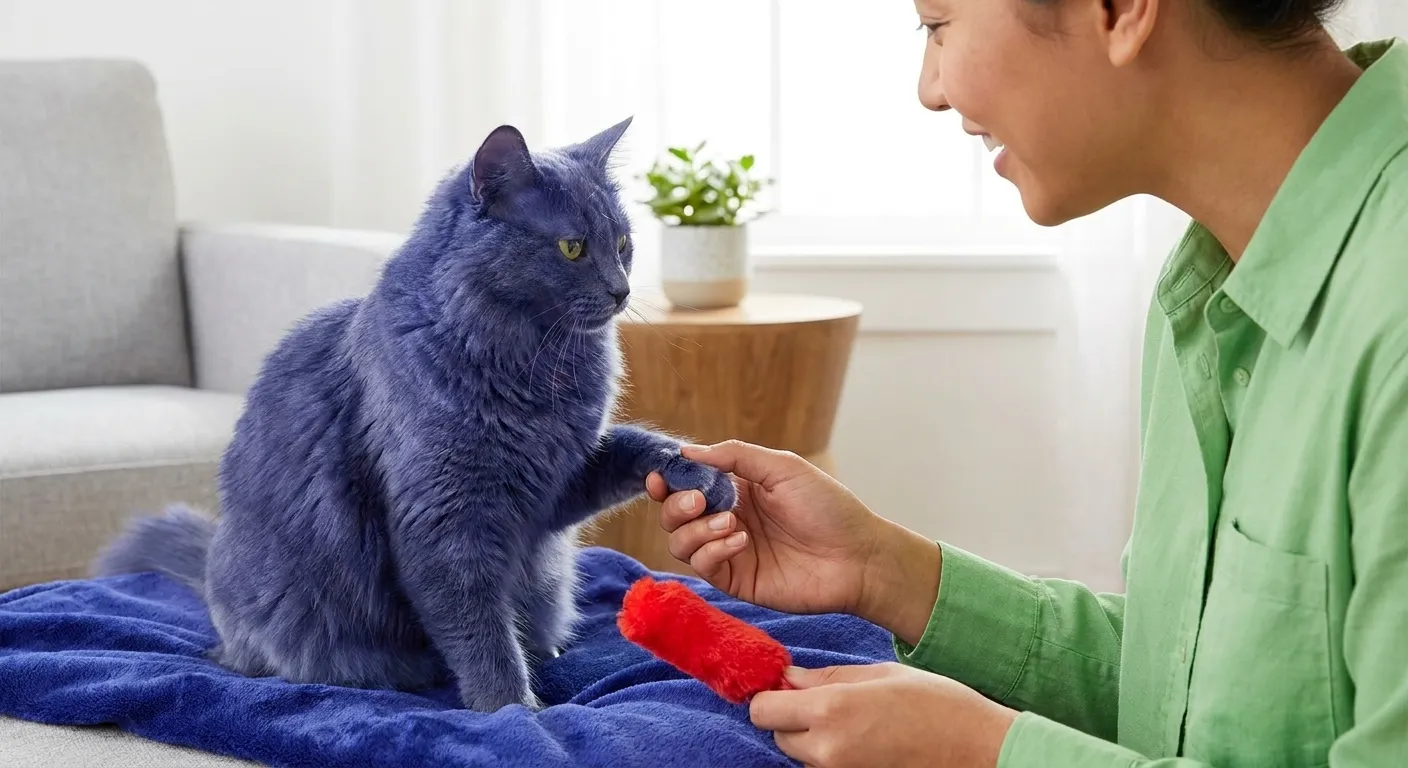
Stress-free cat paw checks are an understandable goal, but no method can guarantee that every cat will remain relaxed. Build confidence by knowing what you intend to observe, what handling has been demonstrated and when you will stop. Confidence should come from clear limits and access to help, rather than from completing every paw despite resistance.
This article is general education, not medical or veterinary advice. A home check is not a veterinary examination or a treatment plan. Ask your veterinary team about health concerns and appropriate care for your cat. Seek urgent assessment for sudden limping, inability to bear weight or severe pain instead of waiting to complete a grooming checklist.
Replace a vague goal with a written plan
Write the task in ordinary words. You might want to notice a visible change during normal relaxed contact, or learn the paw-handling method your veterinary team has demonstrated. Keep a separate list of tasks you are not doing: trimming claws, applying a product, cutting fur or investigating a wound. This prevents a simple check from expanding unexpectedly.
Add a stopping rule to the note. If the cat moves away, resists or appears uncomfortable, stop rather than increasing pressure. If you cannot comfortably observe a particular area, record that limit. An honest partial observation is more useful than claiming that every paw was checked when parts were inaccessible or the cat was distressed.
Prepare questions for a demonstration
Tell your veterinary team which part makes you uncertain. Is it approaching the paw, positioning your hands or distinguishing ordinary observation from claw care? Ask them to demonstrate with your cat where appropriate and to explain what you should leave for professional attention. Discuss previous handling difficulty and any known health concerns.
Repeat the instructions back in your own words and ask for clarification if they remain unclear. Take a short note to share with other household members. A demonstration should address the actual task and cat, rather than leave you attempting to copy a photograph. Ask how to book help if home care is not manageable.
Use the environment to support a modest task
Choose a quiet familiar setting and prepare the care note before approaching the cat. Avoid searching for tools while already holding a paw. Good visibility matters, but it does not justify forcing the cat into a position it resists. If the setup feels awkward, discuss a different arrangement with the professional who demonstrated handling.
Keep unnecessary equipment out of reach. Scissors, clippers, cleaning products and restraint devices do not need to accompany ordinary observation. The presence of a product can tempt you to act before its purpose is assessed. This article does not teach wrapping, pinning or using a hammock to make an unwilling cat complete the task.
Build familiarity before expecting access
Cats Protection’s grooming guidance recommends gradual introduction and as little restraint as possible. Use those principles with individualized advice about ordinary paw contact. An initial session may involve familiar relaxed interaction without inspecting every surface. Do not decide that an apparently small task must be completed immediately.
If an appropriate reward is part of the plan, use it within your cat’s existing care instructions. It does not make uncomfortable handling acceptable or guarantee a cooperative response. Let the cat’s actual reaction guide the stopping point. Repeated difficulty should lead to professional discussion, while a new change suggesting pain needs veterinary attention.
Make observations precise and modest
Use a record with four fields: location, what you noticed, when you noticed it and how the cat was behaving. For example, record that you saw a changed-looking claw during ordinary contact and did not attempt a trim. Avoid labelling the finding an infection, allergy or benign growth from appearance alone.
Mark any area you could not see. Do not squeeze, spread or repeatedly manipulate the paw just to fill an empty field. The veterinary team can advise whether more information or an appointment is needed. A photograph, when easy to obtain without distress, may support a conversation but cannot establish that the paw is medically normal.
Keep movement changes outside the reassurance checklist
A paw that looks ordinary does not rule out a problem when the cat is limping or moving differently. PDSA’s limping and stiffness guidance recommends veterinary attention for such changes, with urgent assessment for sudden limping, inability to bear weight or severe pain. Contact your own veterinary service rather than relying on a home inspection to reassure you.
Describe the change during normal activity and when it began. Do not make the cat repeatedly jump, walk or tolerate manipulation to test your theory. Ask the veterinary team what to do next. Confidence in this situation means recognizing the limit of a grooming observation and acting on the concern appropriately.
Separate confidence from claw-trimming skill
Comfort with briefly touching a paw does not establish readiness to cut a claw. Cats Protection’s claw-care guidance explains that trimming needs vary and recommends veterinary help with changes or suspected growth into the pad. Ask whether the task is needed and obtain a demonstration before purchasing or using clippers.
If the relevant part of the claw is unclear or you feel uncertain, stop. Do not guess an amount to cut simply because the cat is temporarily still. This guide does not provide a cutting angle, trimming schedule or bleeding remedy. The next appropriate step may be a veterinary nurse appointment rather than another home attempt.
Do not treat a finding with an improvised product
A check may reveal something you want to clean or tidy. Pause before acting. Ask your veterinary team about a new skin concern, visible damage or other change. Do not apply a balm, disinfectant or grooming wipe because it is already in your kit or described broadly as natural or pet-safe.
If a product is recommended, use the exact instructions and keep its original label. Ask which area it is intended for and when reassessment is needed. This article does not prescribe paw treatment. Record what you were told so another household member does not add a second product without knowing the existing plan.
Arrange help for difficult coat around the paws
If hair catches or appears matted, leave it for appropriate assessment rather than pulling through the resistance. The ASPCA’s matting guidance advises professional or veterinary assistance and warns against cutting mats with scissors. Close paw work can exceed comfortable ordinary home care even when other coat areas are manageable.
Tell the professional where the problem is and how the cat responds to ordinary contact. Do not keep testing the area while waiting for advice. Ask which setting and approach are appropriate and what home maintenance can follow. A professional plan is more useful than trying increasingly advanced equipment to prove you can manage it yourself.
Review the record without assigning a pass or fail
After a comfortable ordinary interaction, note what you observed and what remains unknown. Keep the task limited next time rather than making up for an incomplete check with a longer session. Discuss suitable frequency and any professional care needs with the veterinary team; this guide does not impose the same schedule on every cat.
Stress-free cat paw checks should remain a comfort goal, not a promise of effortless handling or protection from every health problem. A clear plan makes it easier to notice changes, respect the cat’s limits and seek help. Confidence grows when you can explain both what you did and what required an appropriately qualified professional.
