
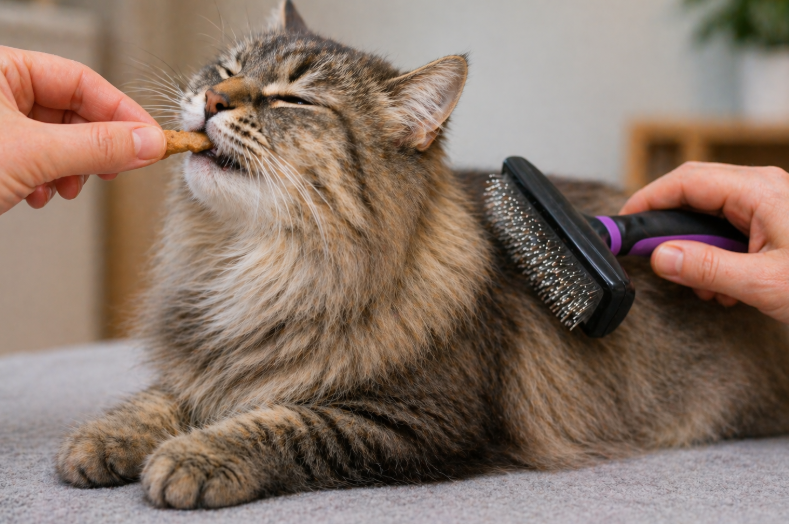
Learning how to calm grooming aggression cats is essential if you want grooming sessions to become safer and more manageable. While grooming is necessary for maintaining your cat’s coat and hygiene, it often triggers stress, fear, or discomfort. Because of this, many cats react defensively, showing signs of aggression such as hissing, scratching, or trying to escape. However, these reactions are not random. They are usually driven by anxiety or past negative experiences.
Using rewards is one of the most effective ways to change this behavior. Instead of forcing grooming, rewards help your cat associate the experience with something positive. Over time, this shifts their mindset and reduces resistance. Therefore, understanding how to calm grooming aggression cats with rewards allows you to build trust and create a smoother routine that benefits both you and your pet.
Why Cats Become Aggressive During Grooming
Before you can calm grooming aggression cats, it is important to understand why this behavior happens. Most cats do not naturally enjoy being handled for long periods, especially when it involves tools they do not recognize. Grooming removes their sense of control, which can trigger defensive instincts.
In addition, discomfort plays a major role. Tangled fur, sensitive skin, or improper brushing techniques can cause pain. When grooming becomes uncomfortable, your cat learns to expect that discomfort and reacts aggressively to avoid it.
Past experiences also influence behavior. If your cat has had a stressful grooming session before, they may anticipate the same outcome again. As a result, aggression becomes a protective response. By understanding these causes, you can approach grooming in a way that focuses on calming rather than forcing.
How Rewards Change Grooming Behavior
Using rewards to calm grooming aggression cats works because it changes how your cat perceives grooming. Instead of seeing it as a negative experience, your cat begins to associate it with something enjoyable.
For example, offering a treat during or after grooming creates a positive link. Over time, your cat starts to expect a reward rather than discomfort. This reduces fear and encourages cooperation.
In addition, rewards help shift focus. When your cat is engaged with a treat or praise, they are less likely to focus on the grooming itself. This distraction can make the process feel less threatening.
Consistency is key. Repeating this positive association during every session gradually transforms your cat’s response. Eventually, grooming becomes a manageable part of their routine rather than a source of stress.
Choosing The Right Rewards For Your Cat
Not all rewards are equally effective when trying to calm grooming aggression cats. The best reward is something your cat truly values. For most cats, this means small, tasty treats that can be given quickly during grooming.
However, food is not the only option. Some cats respond well to praise, gentle petting, or even playtime after grooming. Observing what your cat enjoys most helps you choose the right reward.
Timing also matters. Rewards should be given immediately after calm behavior. This helps your cat connect the reward with the action. If the reward is delayed, the association becomes weaker.
Using a variety of rewards can also keep your cat interested. Rotating treats or combining rewards prevents boredom and maintains motivation throughout the process.
Step By Step Reward-Based Grooming Approach
To successfully calm grooming aggression cats, a gradual approach works best. Start by introducing grooming tools without using them. Let your cat sniff and explore the brush while offering treats. This builds familiarity without pressure.
Next, begin with very short grooming sessions. A few gentle strokes are enough at first. Immediately reward calm behavior. This reinforces the idea that staying relaxed leads to positive outcomes.
As your cat becomes more comfortable, slowly increase the duration. Always watch for signs of stress, and stop before aggression begins. Ending on a positive note is more important than completing the task.
Over time, this step-by-step process builds confidence. Your cat learns that grooming is predictable, safe, and rewarding.
Using Timing To Prevent Aggression
Timing plays a crucial role when trying to calm grooming aggression cats. Starting a session at the wrong time can increase resistance. For example, grooming when your cat is already stressed or energetic often leads to negative reactions.
Instead, choose moments when your cat is naturally calm. After a meal or a short play session is usually ideal. During these times, your cat is more relaxed and receptive.
In addition, recognizing early warning signs helps you act quickly. If your cat shows signs of tension, such as tail flicking or ear flattening, pause and offer a reward. This interrupts the buildup of stress.
By focusing on timing, you can prevent aggression before it starts and create a smoother grooming experience.
Creating A Positive Grooming Environment
Environment also affects how easily you can calm grooming aggression cats. A noisy or busy setting can increase anxiety, making it harder for your cat to relax.
Choosing a quiet, familiar space helps reduce stress. Soft lighting and minimal distractions create a calming atmosphere. In addition, using the same location each time builds consistency and comfort.
Your behavior matters as well. Moving slowly and speaking softly reassures your cat. Sudden movements or loud sounds can undo progress, so maintaining a calm presence is essential.
Combining a peaceful environment with rewards creates a strong foundation for successful grooming sessions.
Common Mistakes To Avoid When Using Rewards
While rewards are effective, certain mistakes can make it harder to calm grooming aggression cats. One common error is using rewards only after aggressive behavior. This can accidentally reinforce the wrong response.
Instead, rewards should be given for calm behavior before aggression occurs. This teaches your cat what you expect and encourages positive actions.
Another mistake is rushing the process. Trying to complete grooming too quickly can overwhelm your cat. Patience is essential for long-term success.
In addition, inconsistent use of rewards can confuse your cat. Regular reinforcement helps maintain progress and builds lasting habits.
Avoiding these mistakes ensures that your efforts remain effective and your cat continues to improve.
Long-Term Benefits Of Reward-Based Grooming
Using rewards to calm grooming aggression cats offers long-term benefits beyond grooming itself. As your cat becomes more comfortable, their overall stress levels decrease. This leads to better behavior in other areas as well.
In addition, the bond between you and your cat strengthens. Positive interactions during grooming build trust and improve communication. Over time, your cat becomes more confident and cooperative.
Regular grooming also becomes easier and more efficient. Instead of struggling through each session, you can complete tasks calmly and safely. This consistency supports your cat’s health and hygiene.
By investing time in reward-based training, you create lasting improvements that benefit both you and your pet.
Conclusion
Learning how to calm grooming aggression cats using rewards transforms grooming from a stressful task into a manageable routine. By focusing on positive reinforcement, proper timing, and a calm environment, you can reduce fear and build trust. While progress may take time, consistency and patience lead to meaningful results.
Over time, your cat begins to associate grooming with positive experiences rather than discomfort. This shift makes each session easier and strengthens your relationship. Ultimately, using rewards is not just about grooming success but about creating a safer and more comfortable life for your cat.
FAQ
- How do rewards help reduce grooming aggression in cats?
Rewards create positive associations, helping your cat feel more comfortable and less fearful during grooming. - What type of treats work best for grooming sessions?
Small, high-value treats that your cat loves are usually the most effective. - How long does it take to see improvement?
Progress varies, but consistent sessions often show results within a few weeks. - Can all cats be trained to accept grooming?
Most cats can improve with patience and the right approach, even if they never fully enjoy grooming. - Should I stop if my cat becomes aggressive?
Yes, stopping early prevents stress and helps maintain a positive experience.
