
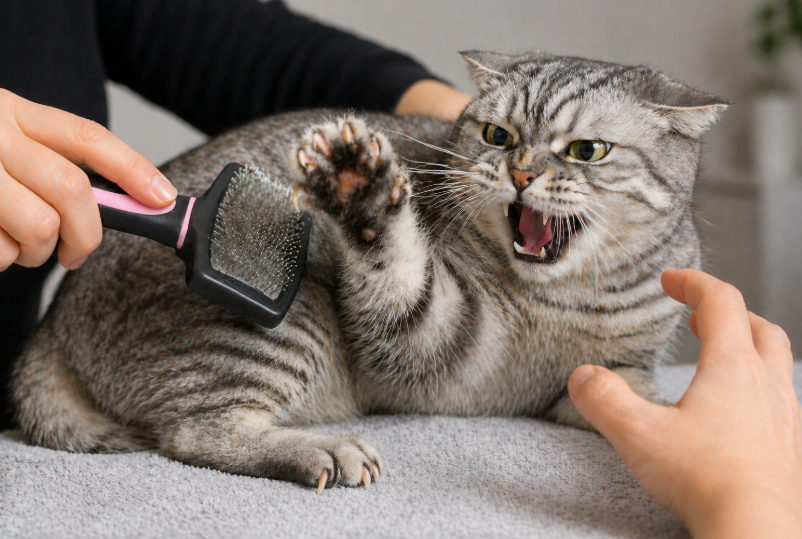
When a cat attacks during grooming, it can feel sudden, stressful, and even frightening. However, this behavior rarely comes out of nowhere. In most cases, it is a response to fear, discomfort, or overstimulation rather than true aggression. Understanding why a cat attacks during grooming is the first step toward handling the situation safely and preventing it from happening again.
Grooming is essential for your cat’s health, yet it must be done in a way that respects your cat’s limits. When a cat attacks during grooming, it is often a sign that something in the process feels unsafe. By learning how to respond calmly and adjust your approach, you can reduce risk and build a more positive grooming experience over time.
Understand Why Aggression Happens
Before you react, it is important to understand why a cat attacks during grooming. Cats are highly sensitive animals, and grooming can trigger stress if it involves pain, restraint, or unfamiliar sensations. For example, brushing through tangles or trimming nails too quickly can cause discomfort.
Additionally, some cats feel trapped during grooming. When they cannot escape, they may react defensively. This is not bad behavior but a natural response to perceived danger.
Past experiences also play a role. If your cat had a negative grooming session before, they may expect the same outcome. Therefore, understanding these triggers helps you respond more effectively when a cat attacks during grooming.
Stay Calm And Avoid Sudden Reactions
Your reaction matters more than you might think when a cat attacks during grooming. Sudden movements, loud voices, or pulling away quickly can escalate the situation. Instead, remain as calm as possible.
Slowly stop what you are doing and give your cat space. Avoid eye contact, as direct staring can feel threatening. By staying composed, you signal that there is no danger, which helps your cat calm down more quickly.
Although it may be instinctive to react, controlling your response prevents further escalation. This calm approach is essential whenever a cat attacks during grooming.
Stop The Session Immediately
When a cat attacks during grooming, continuing the session will only increase stress and damage trust. Therefore, stop immediately and allow your cat to retreat if needed.
Ending the session does not mean failure. Instead, it shows your cat that their signals are respected. This helps reduce fear and makes future sessions easier.
Short breaks are also helpful. Sometimes your cat simply needs time to reset. By stopping at the right moment, you prevent the situation from becoming more serious.
Check For Pain Or Physical Discomfort
Pain is a common reason a cat attacks during grooming. Sensitive areas, hidden injuries, or tight mats can cause discomfort when touched. If your cat reacts suddenly, consider whether something may be hurting them.
Gently inspect your cat once they are calm. Look for signs of irritation, swelling, or tangles. If you suspect a medical issue, consult a veterinarian.
Addressing physical discomfort is essential. When pain is removed, grooming becomes less stressful. This reduces the likelihood that a cat attacks during grooming in the future.
Recognize Warning Signs Before An Attack
Cats rarely attack without warning. Learning to spot these signals helps you act before a cat attacks during grooming. Common signs include tail flicking, flattened ears, and tense body posture.
Some cats may freeze or suddenly stop moving. This stillness often signals rising stress. Vocal cues such as growling or hissing are also clear warnings.
When you notice these signs, pause immediately. Responding early prevents escalation and keeps both you and your cat safe. This awareness is key to avoiding situations where a cat attacks during grooming.
Use Protective Measures When Needed
Safety should always come first when dealing with a cat attacks during grooming. Wearing long sleeves or using protective gloves can reduce the risk of injury. These tools allow you to handle your cat more confidently.
However, protection should not replace proper technique. It simply provides an added layer of safety while you work on improving your approach.
In some cases, using a towel wrap can help. This method gently limits movement and provides a sense of security. Used correctly, it can make grooming safer without increasing stress.
Break Grooming Into Smaller Sessions
Long sessions often lead to frustration and overstimulation. Therefore, if a cat attacks during grooming, consider shortening the process. Focus on one task at a time instead of trying to complete everything at once.
For example, brush for a few minutes or trim just one or two nails. Gradual progress is more effective than forcing a full session.
Short, positive interactions help your cat build tolerance. Over time, this approach reduces the chance that a cat attacks during grooming again.
Rebuild Trust With Positive Experiences
After an aggressive incident, rebuilding trust is essential. When a cat attacks during grooming, it may associate the process with fear. Therefore, focus on creating positive experiences.
Start with gentle petting and handling without using tools. Reward calm behavior with treats or praise. This helps your cat feel safe again.
Gradually reintroduce grooming in small steps. Each positive interaction reduces fear and builds confidence. With consistency, your cat will begin to tolerate grooming more easily.
Adjust Your Technique And Tools
Sometimes the issue is not the cat but the method used. If a cat attacks during grooming, evaluate your technique. Are you brushing too quickly or applying too much pressure?
Using the wrong tools can also cause discomfort. Switch to softer brushes or smaller tools that allow more control. Gentle handling makes a big difference.
Additionally, avoid sensitive areas until your cat becomes more comfortable. By adjusting your approach, you reduce stress and improve cooperation.
Create A Calmer Grooming Environment
The environment plays a major role when a cat attacks during grooming. Loud noises, bright lights, or distractions can increase anxiety. Therefore, choose a quiet, familiar space.
Use soft lighting and minimize interruptions. A calm setting helps your cat relax and stay focused. Familiar scents, such as a favorite blanket, can also provide comfort.
By improving the environment, you create conditions that reduce stress. This makes it less likely that a cat attacks during grooming.
Know When To Seek Professional Help
If aggressive behavior continues, it may be time to seek help. When a cat attacks during grooming repeatedly, a professional groomer or veterinarian can provide guidance.
Professionals have experience handling difficult cases and can offer safer techniques. In some situations, underlying health issues may contribute to aggression.
Seeking help early prevents injuries and ensures your cat receives proper care. It is a responsible step when grooming becomes unsafe.
Conclusion
Dealing with a cat attacks during grooming can be challenging, but it is manageable with the right approach. By staying calm, recognizing warning signs, and adjusting your technique, you can prevent escalation and improve safety.
Over time, patience and consistency help rebuild trust. Grooming becomes less stressful and more predictable, which reduces aggressive reactions. Small changes in handling, environment, and routine make a significant difference.
Ultimately, when you understand why a cat attacks during grooming and respond appropriately, you create a safer and more positive experience for both you and your cat.
FAQ
- Why does my cat suddenly become aggressive during grooming?
This often happens due to fear, discomfort, or past negative experiences. - Should I punish my cat for attacking?
No, punishment increases fear and can worsen aggressive behavior. - How can I prevent scratching or biting during grooming?
Use gentle handling, watch for warning signs, and keep sessions short. - Is it safe to use gloves when grooming?
Yes, protective gloves can reduce injury while you improve your technique. - When should I stop grooming my cat?
Stop immediately if your cat shows clear signs of stress or aggression.
