
Grooming is essential for feline health, yet many owners overlook the early warning signs that indicate a cat stressed during grooming. While brushing and cleaning are necessary, the process can quickly become overwhelming for cats if handled incorrectly. Understanding these stress signals not only prevents aggressive reactions but also helps create a safer and more positive grooming routine for both you and your pet.
When a cat stressed during grooming begins to show discomfort, it rarely happens without warning. In fact, cats communicate clearly through subtle body language, which often goes unnoticed. Therefore, recognizing these early cues can make the difference between a calm session and a stressful encounter. With the right awareness, you can adjust your approach and build a more trusting relationship with your cat.
Early Behavioral Changes You Should Notice
One of the first indicators of a cat stressed during grooming is a sudden change in behavior. For example, a normally relaxed cat may become restless or attempt to move away. This shift often happens before any aggressive reaction, making it a valuable early signal.
Additionally, some cats may freeze in place rather than struggle. Although this may seem like cooperation, it often signals fear or discomfort. Because of this, it is important to observe not just movement but also stillness. A tense body posture usually means your cat is not relaxed.
Moreover, vocal changes can also appear early. Soft growls or low meows may begin subtly, yet they quickly escalate if ignored. By paying attention to these small signs, you can intervene early and reduce the chance of escalation.
Body Language Signals That Indicate Stress
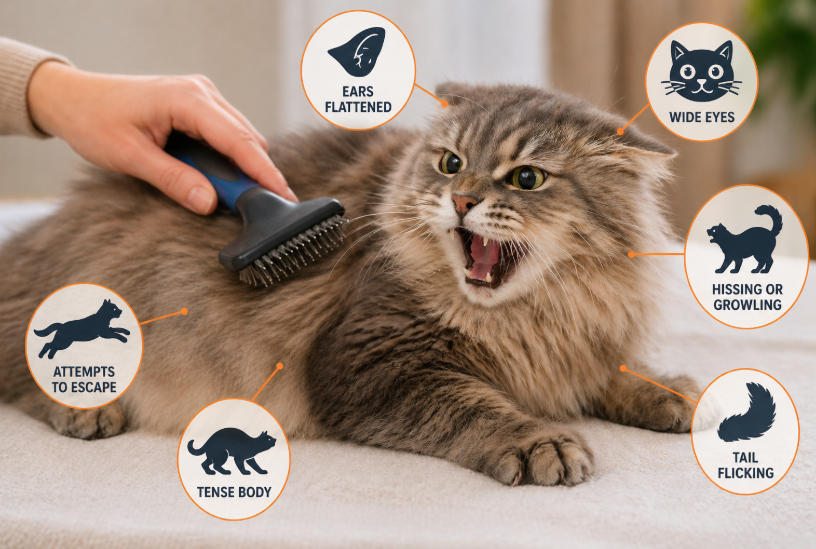
Body language is one of the clearest ways to identify a cat stressed during grooming. Ears are a major indicator. When they flatten against the head, it often signals discomfort or fear. Similarly, a flicking or rapidly swishing tail can show irritation building beneath the surface.
Eye behavior also plays a role. Dilated pupils often indicate stress, especially in a calm environment. If your cat avoids eye contact or suddenly becomes hyper-alert, it may be reacting to discomfort.
Furthermore, muscle tension is another strong signal. A cat stressed during grooming may stiffen its body or press low against a surface. This posture shows that your cat is preparing to either escape or defend itself. Recognizing these signs early allows you to pause before stress turns into aggression.
Vocal And Defensive Reactions
As stress increases, a cat stressed during grooming may begin to vocalize more clearly. Hissing is one of the most obvious warning signs. It indicates that your cat feels threatened and wants distance. Growling, on the other hand, often comes before physical reactions.
Some cats may also let out sharp, sudden meows. These sounds typically signal discomfort, especially if brushing pulls on tangles. Therefore, it is important to stop immediately and assess the situation.
Defensive actions may follow vocal warnings. Swatting, biting, or attempting to escape are clear signs that grooming has gone too far. At this stage, continuing the session can damage trust and increase future resistance. Instead, ending the session calmly is the best approach.
Physical Reactions That Show Discomfort
A cat stressed during grooming often shows physical reactions that go beyond behavior. For instance, excessive shedding during brushing can sometimes indicate stress rather than normal grooming. While shedding is natural, sudden increases may signal anxiety.
Panting is another serious sign. Unlike dogs, cats do not usually pant unless they are highly stressed or overheated. If you notice this, stop grooming immediately and allow your cat to rest.
Additionally, grooming-related stress can cause trembling or slight shaking. Although subtle, this reaction should not be ignored. It indicates that your cat is overwhelmed and needs a break. Paying attention to these physical signs helps you respond before stress worsens.
Changes In Grooming Tolerance Over Time
Sometimes, a cat stressed during grooming does not react strongly at first but gradually becomes less tolerant. For example, a cat that once accepted brushing may begin to resist certain areas. This change often signals that previous sessions caused discomfort.
Moreover, negative associations can build over time. If grooming consistently leads to discomfort, your cat may start avoiding you when tools appear. This avoidance behavior is a clear indicator that stress is developing.
In addition, increased sensitivity in specific areas can occur. The belly, legs, and tail are common spots where cats feel vulnerable. If your cat reacts strongly when these areas are touched, it may be due to past discomfort rather than natural sensitivity alone.
How To Respond When Your Cat Shows Stress
When you notice a cat stressed during grooming, your response is critical. First, pause the session immediately. Continuing despite clear signs of stress can worsen the situation and damage trust.
Next, give your cat space to relax. Allow them to move away and settle in a comfortable area. This break helps reset their emotional state and prevents escalation.
Additionally, consider shortening future sessions. Instead of long grooming periods, try brief, consistent sessions that feel manageable. This approach helps your cat gradually build tolerance without feeling overwhelmed.
Using gentle tools also makes a difference. Brushes designed for sensitive coats reduce pulling and discomfort. Combined with a calm approach, this can significantly improve your cat’s experience.
Preventing Stress Before It Starts
Prevention is often easier than managing a cat stressed during grooming. Establishing a calm routine helps your cat know what to expect. When grooming becomes predictable, it feels less threatening.
Timing also matters. Choose moments when your cat is naturally relaxed, such as after a meal or nap. Avoid grooming during high-energy periods, as this increases resistance.
Furthermore, positive reinforcement can transform the experience. Offering treats or gentle praise during and after grooming builds a positive association. Over time, your cat may begin to accept grooming more willingly.
Consistency plays a key role as well. Regular grooming prevents tangles and reduces the need for painful detangling. As a result, your cat is less likely to associate grooming with discomfort.
When Stress Signals Should Not Be Ignored
While mild signs of a cat stressed during grooming can be managed, some signals require immediate attention. Repeated aggressive reactions may indicate deeper issues, such as pain or skin sensitivity.
Additionally, sudden changes in behavior should not be overlooked. If your cat becomes stressed without an obvious cause, it may be worth consulting a veterinarian. Underlying health issues can sometimes make grooming uncomfortable.
Persistent avoidance is another warning sign. If your cat consistently hides or resists grooming, it may need a different approach. In some cases, professional groomers can provide safer handling techniques.
Recognizing when to seek help ensures your cat’s well-being and prevents long-term stress. Addressing these issues early leads to better outcomes for both you and your pet.
Conclusion
Understanding the signs of a cat stressed during grooming is essential for creating a safe and positive experience. While grooming is necessary, it should never come at the cost of your cat’s comfort or trust. By paying attention to body language, vocal cues, and physical reactions, you can identify stress early and respond appropriately.
Over time, small adjustments can make a significant difference. Gentle techniques, shorter sessions, and consistent routines all contribute to a calmer experience. As your awareness improves, grooming becomes less of a struggle and more of a bonding opportunity.
Ultimately, the goal is not just to maintain your cat’s coat but to ensure they feel secure throughout the process. With patience and understanding, even a cat stressed during grooming can learn to tolerate, and sometimes even enjoy, regular care.
FAQ
- What are the first signs of grooming stress in cats?
Early signs include restlessness, tail flicking, flattened ears, and subtle vocal changes. - Why does my cat suddenly resist brushing?
This may be due to past discomfort, sensitivity, or negative associations with grooming sessions. - Should I stop grooming if my cat hisses?
Yes, hissing is a clear warning sign that your cat feels threatened and needs space. - How can I make grooming less stressful?
Use short sessions, gentle tools, and reward calm behavior to build a positive routine. - When should I seek professional help?
If your cat shows consistent aggression or extreme stress, consult a groomer or veterinarian.
