
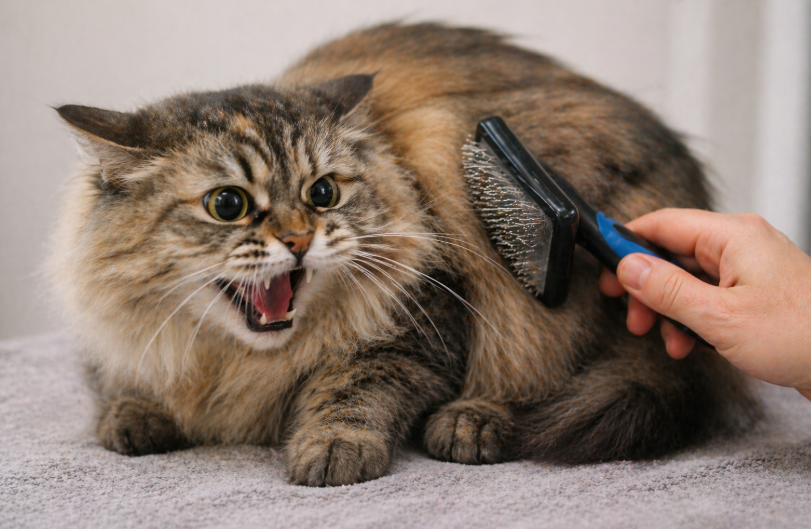
Recognizing when your cat afraid during grooming is one of the most important steps in creating a safe and stress-free grooming routine. While grooming is essential for maintaining your cat’s coat and overall hygiene, it can quickly become a negative experience if fear is involved. Many owners mistake fear for stubbornness or aggression, but in reality, most cats are simply reacting to discomfort or anxiety.
Because cats are highly sensitive animals, they rely on body language and subtle signals to communicate how they feel. If these signals are ignored, fear can escalate into scratching, biting, or complete resistance. Therefore, learning how to identify early warning signs helps you respond before the situation becomes overwhelming. Over time, this awareness allows you to build trust and create a more positive grooming experience.
Understanding Why Cats Feel Fear During Grooming
When a cat afraid during grooming, the root cause is often linked to instinct and past experiences. Cats naturally prefer to be in control of their environment, and grooming by a human removes that control. As a result, they may feel vulnerable or threatened.
In addition, unfamiliar tools, sounds, or movements can trigger anxiety. For example, brushes pulling on fur or clippers making noise can create discomfort. Even the act of being held in place may cause stress if your cat is not used to it.
Moreover, past negative experiences play a major role. If your cat has been hurt or startled during grooming before, they may anticipate the same outcome again. This anticipation leads to defensive behavior. Understanding these triggers helps explain why a cat afraid during grooming reacts the way they do.
Body Language Signs Of Fear
One of the clearest indicators of a cat afraid during grooming is body language. Cats rarely express fear through obvious actions at first. Instead, they show subtle changes that signal discomfort.
For instance, a tense body is often one of the earliest signs. Your cat may stiffen or stop moving naturally. In addition, ears pulled back against the head indicate unease. This position shows that your cat is becoming defensive.
Another common sign is tail movement. A flicking or rapidly swishing tail suggests irritation or stress. At the same time, dilated pupils can signal fear, especially if the environment is not dark.
By noticing these small changes, you can stop grooming before fear escalates. This approach prevents aggressive reactions and builds trust over time.
Vocal And Behavioral Signals To Watch
Beyond body language, vocal and behavioral cues also reveal when a cat afraid during grooming. While ragdolls and many other cats are usually quiet, fear can change their communication style.
For example, growling, hissing, or sudden meowing often indicates discomfort. These sounds are warnings that your cat wants space. Ignoring them may lead to scratching or biting.
In addition, sudden attempts to escape are strong indicators of fear. Your cat may try to jump away or hide. Freezing behavior is also common. Instead of moving, some cats stay completely still, which signals high stress.
Recognizing these behaviors early allows you to pause and reassess the situation. This helps prevent fear from turning into aggression.
Physical Reactions That Indicate Stress
When a cat afraid during grooming, physical reactions may also appear. These responses are often automatic and harder to control, making them important signals to watch.
For instance, excessive shedding during grooming can indicate stress. While some shedding is normal, sudden increases may signal anxiety. In addition, panting or rapid breathing is a sign of extreme stress and should not be ignored.
Some cats may also groom themselves excessively after a session. This behavior is often a way to cope with stress. Similarly, trembling or crouching low to the ground can indicate fear.
By paying attention to these physical reactions, you can better understand how your cat feels and adjust your approach accordingly.
Common Triggers That Cause Grooming Fear
Understanding triggers helps explain why a cat afraid during grooming reacts negatively. One of the most common triggers is rough handling. Pulling on fur or holding your cat too tightly can cause discomfort and fear.
Another trigger is unfamiliar tools. Brushes that are too harsh or noisy grooming devices can make your cat uneasy. In addition, grooming in a busy or loud environment increases stress levels.
Timing also matters. Grooming when your cat is already anxious or overstimulated can make the experience worse. For example, attempting to groom after a stressful event may lead to stronger resistance.
By identifying and reducing these triggers, you create a calmer and more controlled grooming environment.
How To Respond When Your Cat Shows Fear
When you notice your cat afraid during grooming, your response plays a critical role. Continuing despite clear signs of fear often leads to negative associations. Instead, stopping the session is the best approach.
Taking breaks allows your cat to calm down and regain a sense of control. In addition, speaking softly and moving slowly helps reduce tension. Sudden movements should always be avoided.
Positive reinforcement is also effective. Offering treats or praise after a short, calm session helps your cat associate grooming with positive outcomes. Over time, this changes their perception and reduces fear.
Consistency is key. Short, regular sessions are more effective than long, stressful ones. This gradual approach helps your cat build confidence.
Building A Positive Grooming Routine
Creating a routine helps reduce the chances of a cat afraid during grooming. Cats feel more secure when they know what to expect. Therefore, grooming at the same time and in the same place each day creates familiarity.
Starting slowly is important. Begin with gentle petting before introducing grooming tools. This helps your cat relax and feel comfortable. Over time, you can gradually increase the duration of grooming sessions.
In addition, choosing the right tools makes a difference. Soft brushes designed for your cat’s coat type reduce discomfort. Using gentle techniques ensures the experience remains positive.
By focusing on routine and comfort, you transform grooming into a manageable and even enjoyable activity.
When Fear Becomes Aggression
If a cat afraid during grooming is pushed too far, fear can turn into aggression. This is a natural defense mechanism, not a sign of bad behavior. Scratching or biting often occurs when your cat feels they have no other option.
Recognizing early signs prevents this escalation. Once aggression begins, it is important to stop immediately. Continuing can damage trust and make future grooming more difficult.
In some cases, professional help may be needed. Groomers and veterinarians have experience handling fearful cats safely. They can also identify underlying issues that may be causing discomfort.
Addressing fear early helps prevent long-term behavioral problems and keeps both you and your cat safe.
Long-Term Benefits Of Understanding Grooming Fear
Learning to recognize when your cat afraid during grooming offers long-term benefits. It improves your relationship with your cat and reduces stress during routine care.
When your cat feels safe, they are more likely to cooperate. This makes grooming easier and more effective. In addition, reducing stress supports overall health and wellbeing.
Over time, your cat may even begin to tolerate grooming without resistance. While some cats may never enjoy it completely, they can learn to accept it calmly. This progress comes from patience, consistency, and understanding.
Conclusion
Understanding the signs of a cat afraid during grooming allows you to approach grooming with patience and awareness. Instead of forcing the process, recognizing fear signals helps you adjust your technique and create a safer experience. By paying attention to body language, vocal cues, and physical reactions, you can respond appropriately and prevent stress from escalating.
With time and consistency, grooming can become less stressful for your cat. Building trust, using gentle methods, and creating a calm environment all contribute to success. Ultimately, a thoughtful approach ensures that grooming remains a necessary but manageable part of your cat’s care routine.
FAQ
- How can I tell if my cat is scared during grooming?
Look for signs like flattened ears, tail flicking, and attempts to escape. - Why does my cat suddenly resist grooming?
It may be due to pain, fear, or a negative past experience. - Should I stop grooming if my cat shows fear?
Yes, stopping early helps prevent stress and builds trust over time. - Can grooming fear be reduced over time?
Yes, with patience, positive reinforcement, and gradual exposure. - What is the safest way to calm a stressed cat?
Use gentle handling, a quiet environment, and short grooming sessions.
