
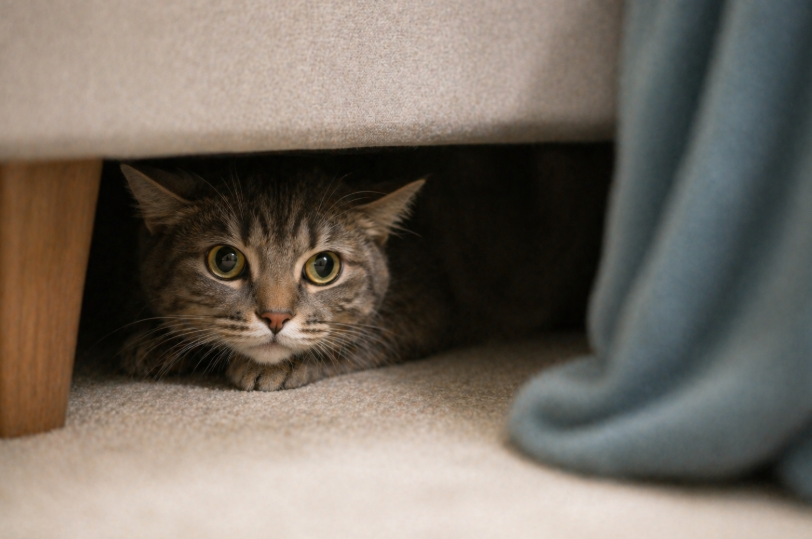
If you have ever wondered why your cat is hiding, you are not alone. Many cat owners become concerned when their normally social pet suddenly disappears under furniture or avoids interaction. While hiding is a natural behavior for cats, it often signals that something in their environment or routine has changed. Understanding why your cat is hiding helps you respond in the right way and support your cat’s well-being.
Cats are instinctively cautious animals. In the wild, hiding protects them from danger and allows them to observe safely. However, in a home environment, frequent or sudden hiding can indicate stress, discomfort, or even health issues. By recognizing the reasons behind this behavior, you can take steps to make your cat feel secure again.
Natural Instincts And Survival Behavior
One of the most basic reasons why your cat is hiding comes from instinct. Cats are both predators and prey, which means they are wired to seek shelter when they feel uncertain. Even in a safe home, this instinct remains strong.
For example, a cat may hide when something unfamiliar enters their space. This could be a new object, a loud sound, or even a change in routine. Hiding allows your cat to assess the situation without feeling exposed.
Additionally, some cats simply prefer quiet, enclosed spaces. While this can be normal, it becomes important to observe frequency and changes in behavior. Understanding these instincts helps explain why your cat is hiding without immediately assuming something is wrong.
Stress And Environmental Changes
Stress is one of the most common answers to why your cat is hiding. Cats are highly sensitive to changes, and even small adjustments can disrupt their sense of security. Moving furniture, introducing new pets, or changes in daily routine can all trigger hiding behavior.
Noise is another major factor. Loud environments, sudden sounds, or busy households can overwhelm your cat. When this happens, hiding becomes a way to escape stimulation and regain control.
Additionally, unfamiliar visitors can cause stress. Even friendly interactions may feel threatening to a cautious cat. By identifying these stressors, you can better understand why your cat is hiding and work to create a calmer environment.
Health Issues And Physical Discomfort
Sometimes, why your cat is hiding is related to health problems. Cats are known for hiding pain, which makes this behavior an important warning sign. If your cat suddenly begins hiding more than usual, it may be experiencing discomfort.
Conditions such as injuries, digestive issues, or infections can cause a cat to withdraw. In these cases, hiding provides a quiet space to rest and recover. However, this also makes it harder for owners to notice the problem.
Watch for additional signs such as reduced appetite, changes in litter box habits, or low energy. If these symptoms appear alongside hiding, it is important to consult a veterinarian. Recognizing when why your cat is hiding is linked to health can prevent more serious issues.
Fear And Anxiety Triggers
Fear plays a major role in why your cat is hiding. Cats may hide when they feel threatened, even if the threat is not obvious to you. Sudden movements, unfamiliar objects, or even strong smells can create anxiety.
For example, cleaning products or new scents can make your cat uncomfortable. Similarly, changes in lighting or shadows can cause confusion. These small triggers often go unnoticed but can lead to hiding behavior.
Additionally, past experiences can influence fear. A cat that has experienced stress or trauma may be more sensitive to changes. Understanding these triggers helps explain why your cat is hiding and allows you to reduce anxiety in their environment.
Territory And Lack Of Safe Spaces
Cats rely on territory to feel secure. Therefore, why your cat is hiding may be linked to a lack of safe spaces. If your home does not provide enough quiet areas, your cat may create its own hiding spots.
Competition with other pets can also affect this behavior. If your cat feels crowded or unable to claim space, it may retreat to hidden areas. This is especially common in multi-pet households.
Providing designated safe zones helps reduce this issue. Cat trees, covered beds, or quiet corners give your cat a place to relax without hiding excessively. Addressing territory concerns can significantly reduce why your cat is hiding.
Routine Disruptions And Unpredictability
Cats thrive on routine, which means disruptions can explain why your cat is hiding. Changes in feeding times, sleep patterns, or daily interactions can create uncertainty. When routines shift, your cat may feel unsettled.
For example, travel, new work schedules, or rearranged living spaces can affect your cat’s comfort. Even small changes can lead to hiding as your cat adjusts.
Maintaining consistency helps your cat feel secure. Regular feeding, playtime, and interaction create a predictable environment. By restoring routine, you can reduce why your cat is hiding and encourage more relaxed behavior.
Social Preferences And Personality Differences
Not all cats are naturally social. Sometimes, why your cat is hiding simply reflects their personality. Some cats prefer solitude and may spend more time in quiet areas.
Shy or introverted cats are more likely to hide, especially in busy households. This behavior is not necessarily a problem unless it changes suddenly or becomes excessive.
Respecting your cat’s personality is important. While encouraging interaction is helpful, forcing it can increase stress. Understanding these differences helps you accept why your cat is hiding without creating unnecessary pressure.
How To Respond When Your Cat Hides
Knowing how to respond is just as important as understanding why your cat is hiding. First, avoid forcing your cat out of its hiding spot. This can increase fear and damage trust.
Instead, create a calm and welcoming environment. Speak softly and move slowly when near your cat. Allow them to come out on their own terms.
Additionally, provide positive reinforcement. Offering treats or gentle interaction when your cat emerges helps build confidence. Over time, this approach reduces hiding and strengthens your bond.
Creating A More Comfortable Environment
Improving your home environment can address why your cat is hiding effectively. Start by reducing noise and minimizing sudden changes. A calm atmosphere helps your cat feel safe.
Add comfortable resting areas in different parts of your home. This gives your cat options and reduces the need to hide in hard-to-reach places. Soft bedding and familiar scents also provide comfort.
Interactive play can also help. Engaging your cat with toys builds confidence and reduces anxiety. By creating a supportive environment, you can gradually reduce why your cat is hiding.
When To Seek Professional Help
While hiding is often normal, there are times when professional help is needed. If why your cat is hiding becomes frequent, prolonged, or combined with other symptoms, it may indicate a deeper issue.
Sudden changes in behavior should always be taken seriously. If your cat stops eating, avoids interaction completely, or shows signs of illness, consult a veterinarian.
Behavioral specialists can also help identify stress triggers and provide solutions. Seeking help ensures your cat receives the care it needs and prevents long-term problems.
Conclusion
Understanding why your cat is hiding allows you to respond with care and confidence. While hiding is a natural behavior, it often reflects stress, fear, or changes in the environment. By identifying the cause, you can take steps to improve your cat’s comfort and well-being.
Small adjustments, such as maintaining routine, reducing noise, and providing safe spaces, can make a big difference. Over time, your cat will feel more secure and less likely to hide.
Ultimately, recognizing why your cat is hiding is about understanding your cat’s needs. When you respond with patience and awareness, you create a stronger bond and a happier, more relaxed pet.
FAQ
- Is it normal for cats to hide during the day?
Yes, many cats hide as part of their natural behavior, especially when resting or feeling cautious. - When should I worry about hiding behavior?
You should be concerned if hiding is sudden, prolonged, or paired with changes in eating or activity. - How can I encourage my cat to come out?
Use treats, gentle interaction, and a calm environment to help your cat feel safe. - Can stress cause a cat to hide frequently?
Yes, stress is one of the most common reasons cats hide in a home environment. - Should I pull my cat out of hiding spots?
No, forcing your cat out can increase fear and damage trust.
