
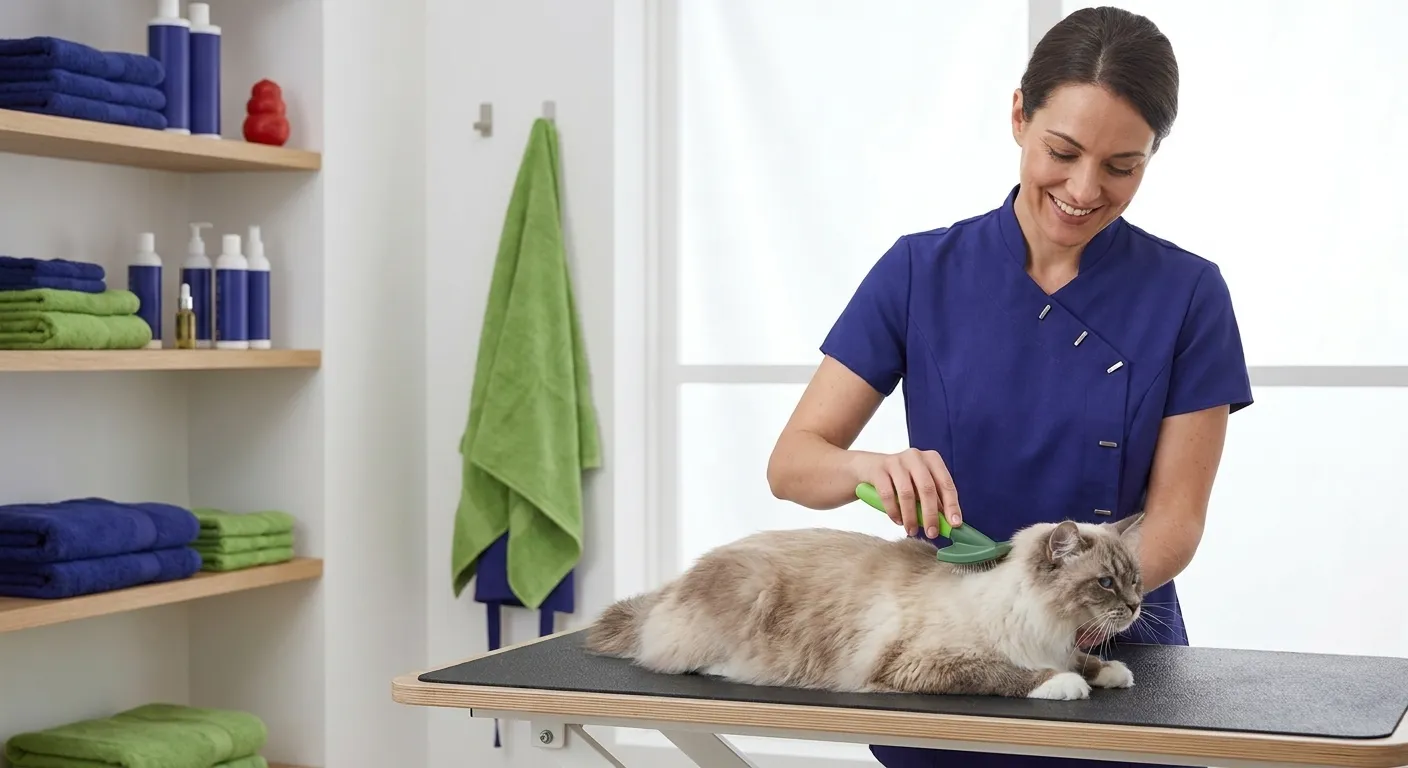
Professional cat grooming services help when mats, nails or stress outgrow home care. This guide is general information only — not veterinary advice. Ask your veterinarian about your own cat before you book sedation or medicated baths.
Disclaimer: This content is for informational purposes only and is not a substitute for professional veterinary advice, diagnosis or treatment.
Primary sources to read first
- VCA — Grooming and coat care for your cat
- International Cat Care — Grooming your cat
- Cornell Feline Health Center — A hairy dilemma
Those pages explain coat care and when owners should step in. Skip market-size or price claims from memory — ask salons for written estimates instead.
When professional cat grooming services help
- Severe mats that pull on skin — do not cut against the skin with kitchen scissors.
- Dense long coats that home brushing cannot keep up with.
- Seniors or cats with limited mobility who cannot reach themselves.
- Nail trims when home attempts end in panic.
- Skin or coat changes you want a second set of eyes on before the vet visit.
Read the VCA and International Cat Care framing, then decide with your vet whether a salon visit or clinic groom is safer for this cat.
What a typical visit may include
Ask the salon to list services in writing. Common packages mention bathing with feline shampoo, drying, brushing or de-shedding, nail trims, ear and eye wipe-downs, and sanitary trims. Specialized add-ons may include careful de-matting. Medicated products belong under veterinary direction.
How to choose a groomer
- Ask about cat-specific experience and training.
- Visit if allowed — look for calm, clean spaces and separate cat areas.
- Ask how they handle fearful cats and when they stop a session.
- Ask which products they use and whether they are cat-formulated.
- Ask about emergency and vet-referral policies.
- Get a written estimate without relying on remembered price ranges from blogs.
- Ask your veterinarian for local recommendations.
Home care still matters
Professional visits work best beside a calm home brush routine. See our related guides on preventing matting and tools for anxious cats. Cornell’s hairy-dilemma page helps when coat and hairball questions overlap.
Checklist before you book professional cat grooming services
- Read the three primary pages linked above.
- Photo any mats or skin spots for the groomer and vet.
- List medications and stress history.
- Confirm who may authorize stopping a session.
- Plan a quiet homecoming evening without guests.
What not to do
- Do not demand full shaves without discussing coat protection with a vet or experienced groomer.
- Do not bring human shampoo.
- Do not hide bite history from the salon.
- Do not treat salon dental wipe-downs as a substitute for veterinary dentistry.
When to call the vet instead
Call about painful mats with skin wounds, sudden coat loss, parasites you cannot identify, breathing stress, or any request for sedation — sedation decisions belong with a veterinarian.
Talking with your veterinarian first
Bring photos and a list of coat changes to the exam. Ask whether a salon visit is appropriate or whether a clinic groom is safer. That single conversation prevents booking the wrong setting for professional cat grooming services.
If two sources disagree — a forum tip versus your veterinarian — keep the veterinarian’s plan.
FAQ: professional cat grooming services
How often should we book?
Ask your groomer and vet based on coat type and mat risk — do not copy a generic calendar from a blog.
What will it cost?
Request a written quote for your cat’s coat and temperament. Prices vary by region and condition.
Can groomers handle fearful cats?
Many can, with short sessions and stop rules. Ask how they work before you book.
Is sedation routine?
No. Discuss only with your veterinarian when needed.
Salon or clinic?
Medical issues belong in a clinic; cosmetic and hygiene maintenance often fit a feline-experienced salon.
Household coordination
Write who books, who drops off, and who does between-visit brushing. Shared cats miss appointments when everyone assumes someone else called.
Keep a tote with treats, a familiar towel and vaccination records so drop-off is calm.
Aftercare
Offer water, a quiet room and a short play or brush session the next day if your cat allows it. Watch for redness where mats were removed and call the vet if skin looks sore.
Building trust before the appointment
Practice carrier rides and short towel wraps at home so the salon is not the first time your cat feels restrained. Professional cat grooming services go smoother when the carrier is already a familiar space.
Offer special meals only after calm carrier practice so the box predicts good things.
Questions for the drop-off desk
- Who will handle my cat, and may I meet them?
- Where will my cat wait between steps?
- What happens if mats need a closer clip than expected?
- How will you reach me during the visit?
- What aftercare do you recommend tonight?
Write the answers on your checklist card.
Budget without invented numbers
Ask for a written estimate that lists bath, brush, nails and de-matting separately. Compare two salons the same week. Ask each salon for a written estimate when planning professional cat grooming services.
Long-haired breed notes
Persians, Maine Coons and similar coats often need more frequent help. Read International Cat Care and VCA for coat-care framing, then ask your groomer for a maintenance plan you can keep between visits.
Daily gentle home brushing still matters even when you book salon visits.
Skin and allergy red flags
Itching, open sores, foul odor or sudden bald patches belong with your veterinarian before a cosmetic appointment. A salon is not a substitute for diagnosis.
Transport and homecoming
Use a sturdy carrier, secure it in the car, and keep the radio soft. At home, offer a quiet room, fresh water and a clean litter box. Delay guests until your cat settles.
Working with anxious cats over several visits
Ask whether the salon offers shorter introductory appointments before a full package. Professional cat grooming services can be staged: nails first, then a brush-only visit, then a bath when trust grows.
Celebrate small wins at home with play so the carrier is not only linked to the salon.
Insurance and records
Keep vaccination records in the tote. Ask whether your pet insurance covers accidental injury during grooming and what documentation they need — write the answer, do not invent coverage rules.
Seasonal shedding and salon timing
Heavy shed seasons may need tighter home brushing between salon dates. Use the VCA coat-care framing and adjust your calendar with the groomer rather than copying a generic interval from a blog.
Sanitary trims and hygiene
Ask the groomer to explain sanitary trims in plain language and whether your cat needs one. Professional cat grooming services should never surprise you with a clip you did not approve in writing.
Watch the litter box for a day after a sanitary trim and call the vet if you see pain or straining.
Flea and skin product boundaries
Parasite products and medicated shampoos are medical decisions. Confirm with your veterinarian before a salon applies anything beyond a routine feline shampoo you already approved.
Closing tip
Professional cat grooming services work best as a planned partnership with your vet notes open, not as an emergency scissors session on the bathroom floor.
This week, open the VCA grooming page, photograph any problem mats, and call one feline-experienced groomer with your written question list before you book.
