
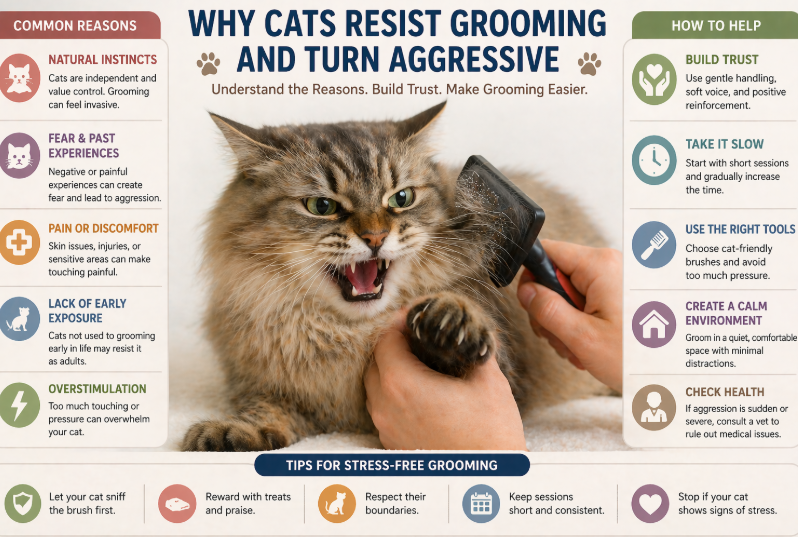
When cats resist grooming aggressive reactions, it often surprises owners who expect grooming to be a simple task. While grooming is essential for maintaining your cat’s coat and hygiene, not all cats tolerate it easily. In fact, resistance is quite common, especially if the experience feels uncomfortable, unfamiliar, or stressful. Because cats are sensitive animals, even small triggers can lead to defensive behavior.
Understanding why cats resist grooming aggressive responses is the first step toward solving the problem. Instead of assuming your cat is simply being difficult, it helps to look deeper into their instincts and experiences. When you identify the cause, you can adjust your approach and create a more positive grooming routine. Over time, this leads to better cooperation and a calmer experience for both you and your cat.
Understanding Natural Grooming Instincts
To understand why cats resist grooming aggressive behavior, it is important to recognize their natural instincts. Cats are naturally self-groomers. They spend a large portion of their day licking and cleaning themselves. Because of this, they may not feel the need for human intervention.
In addition, grooming themselves allows them to stay in control. When someone else handles them, that control is taken away. As a result, they may react defensively. This reaction is not personal; it is simply part of their instinct to protect themselves.
Moreover, cats rely heavily on scent. When grooming tools or human hands introduce unfamiliar smells, it can create discomfort. Therefore, resistance may come from sensory overload rather than aggression alone. By respecting these instincts, you can approach grooming more thoughtfully.
Fear And Negative Past Experiences
One of the main reasons cats resist grooming aggressive responses is fear. If a cat has had a bad grooming experience in the past, they may associate grooming with pain or stress. For example, pulling on tangled fur or using rough handling can create lasting memories.
Because cats learn through experience, even a single negative event can affect future behavior. As a result, they may become defensive before grooming even begins. This anticipation of discomfort leads to aggression as a protective response.
In addition, sudden movements or loud noises during grooming can increase fear. Cats prefer calm and predictable environments. Therefore, creating a quiet and gentle setting helps reduce anxiety and builds trust over time.
Sensitivity To Touch And Pain
Another reason cats resist grooming aggressive behavior is physical sensitivity. Some cats are more sensitive to touch than others. Areas like the belly, tail, and legs can be particularly uncomfortable.
In some cases, resistance may also signal pain. Skin conditions, injuries, or underlying health issues can make grooming uncomfortable. When touched in these areas, cats may react aggressively to avoid discomfort.
Because of this, it is important to observe your cat’s reactions closely. If aggression appears suddenly or worsens, a veterinary check may be necessary. Identifying and addressing pain early helps prevent further stress and improves your grooming routine.
Lack Of Early Grooming Exposure
Early experiences play a major role in behavior. When cats resist grooming aggressive reactions, it is often because they were not introduced to grooming as kittens. Without early exposure, grooming feels unfamiliar and threatening.
Kittens that experience gentle brushing and handling early in life are more likely to accept grooming as adults. In contrast, cats introduced later may struggle to adapt. However, this does not mean change is impossible.
With patience and gradual exposure, even older cats can learn to tolerate grooming. Starting slowly and building positive associations helps them feel more comfortable. Over time, this reduces resistance and improves cooperation.
Overstimulation During Grooming
Cats can become overstimulated quickly, which explains why cats resist grooming aggressive behavior even during calm sessions. While petting or brushing may start positively, too much stimulation can trigger a sudden reaction.
Signs of overstimulation include tail flicking, ear flattening, or sudden tension. If these signals are ignored, the cat may respond with scratching or biting. Therefore, recognizing these early signs is essential.
Short, gentle grooming sessions work best. Instead of trying to complete everything at once, breaking grooming into smaller sessions prevents overload. This approach keeps your cat comfortable and reduces the chance of aggression.
Improper Grooming Techniques
Sometimes, the issue is not the cat but the technique. When cats resist grooming aggressive responses, improper tools or methods may be the cause. Using the wrong brush or applying too much pressure can create discomfort.
For example, brushing too hard or pulling through knots can cause pain. Similarly, using loud grooming tools may create fear. Therefore, choosing the right equipment and using gentle movements makes a significant difference.
In addition, following your cat’s natural coat direction helps reduce resistance. Smooth, slow strokes feel more comfortable and less threatening. By improving your technique, you create a more positive experience for your cat.
Building Trust Through Positive Reinforcement
To address why cats resist grooming aggressive behavior, building trust is essential. Positive reinforcement helps create a connection between grooming and good experiences. Treats, praise, and gentle interaction encourage cooperation.
For example, offering a small treat after each grooming session helps your cat associate grooming with rewards. Over time, this changes their perception and reduces fear. Consistency is key in this process.
In addition, staying calm during grooming sessions is important. Cats can sense tension, so a relaxed approach helps them feel safe. By focusing on trust, you gradually transform grooming into a positive routine.
Creating A Calm Grooming Environment
Environment plays a major role when cats resist grooming aggressive behavior. A noisy or busy setting can increase stress and trigger defensive reactions. Therefore, choosing a quiet and comfortable location is essential.
Soft lighting and minimal distractions help your cat stay relaxed. In addition, grooming at the same time each day creates a predictable routine. This consistency reduces anxiety and builds familiarity.
Using calming techniques, such as gentle talking or slow movements, also helps. Some owners find that grooming after playtime works well, as the cat is already relaxed. By creating the right environment, you support a smoother grooming experience.
When To Seek Professional Help
In some cases, cats resist grooming aggressive behavior despite your best efforts. When this happens, seeking professional help may be necessary. Groomers and veterinarians have experience handling difficult situations safely.
Professional groomers use specialized techniques to minimize stress. They also have tools designed for sensitive cats. In addition, veterinarians can check for underlying health issues that may be causing discomfort.
If aggression becomes severe or dangerous, it is important to act early. Professional guidance ensures both your safety and your cat’s wellbeing. Addressing the issue promptly prevents it from worsening over time.
Conclusion
Understanding why cats resist grooming aggressive behavior allows you to approach grooming with patience and empathy. Instead of viewing aggression as a problem, it becomes a signal that something needs to change. Whether it is fear, sensitivity, or past experiences, identifying the cause helps you adjust your approach.
By using gentle techniques, creating a calm environment, and building trust through positive reinforcement, you can transform grooming into a more comfortable experience. Over time, consistency and patience lead to noticeable improvements. With the right approach, even the most resistant cat can learn to tolerate and even accept grooming.
FAQ
- Why does my cat get aggressive during grooming?
Aggression often comes from fear, discomfort, or overstimulation during the grooming process. - How can I calm my cat before grooming?
Creating a quiet environment and using gentle interaction helps reduce stress before starting. - What tools should I use for grooming my cat?
Soft brushes designed for your cat’s coat type are the safest and most comfortable option. - Can older cats learn to accept grooming?
Yes, with patience and gradual exposure, older cats can adapt to grooming routines. - When should I stop a grooming session?
Stop immediately if your cat shows signs of stress or discomfort to prevent escalation.
