
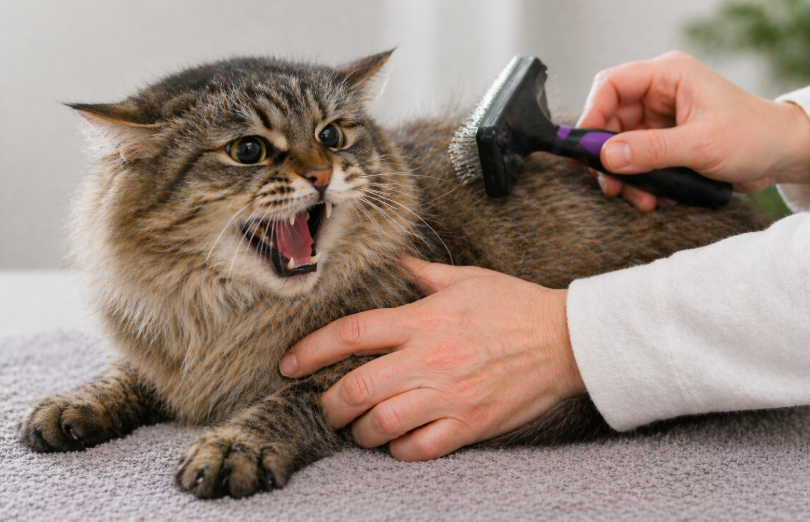
Learning how to handle aggressive cat grooming is essential if your cat reacts with hissing, scratching, or biting during routine care. While grooming is necessary for your cat’s health, it can quickly become stressful if fear or discomfort is involved. Many cats show aggression not because they are difficult, but because they feel threatened or overwhelmed. Therefore, understanding the root of the behavior is the first step toward creating a calmer experience.
Instead of forcing grooming, it is far more effective to approach the process with patience and awareness. When you understand how to handle aggressive cat grooming properly, you reduce stress for both you and your cat. Over time, this creates a routine that feels safe, predictable, and easier to manage.
Understanding Why Cats Become Aggressive During Grooming
To handle aggressive cat grooming effectively, you must first understand why aggression happens. In most cases, aggression is a defensive response. Cats rely on control and comfort, and grooming can disrupt both. When they feel restrained or uncomfortable, they may react quickly to protect themselves.
In addition, pain is a common trigger. Tangled fur, sensitive skin, or underlying health issues can make brushing uncomfortable. Because cats cannot explain this directly, they use behavior to communicate discomfort.
Past experiences also play a role. If your cat had a stressful grooming session before, they may expect the same outcome again. As a result, aggression begins even before grooming starts. Recognizing these causes helps you adjust your approach and handle aggressive cat grooming more effectively.
Recognizing Early Warning Signs Before Aggression
Before aggression escalates, cats usually give subtle warnings. Learning to spot these signals helps you handle aggressive cat grooming before it becomes dangerous. For example, a stiff body or flattened ears often indicates discomfort.
Tail movement is another key sign. A rapidly flicking tail shows irritation and rising stress. In addition, dilated pupils or sudden stillness may signal fear. These early cues are easy to miss, but they are critical.
If you notice these signs, pause immediately. Continuing grooming at this stage often leads to scratching or biting. By stopping early, you show your cat that their signals are respected. This builds trust and reduces the likelihood of aggressive reactions in future sessions.
Preparing The Right Environment For Grooming
A calm environment plays a major role when you handle aggressive cat grooming. Loud noises, sudden movements, or busy surroundings can increase anxiety. Therefore, choosing a quiet and familiar space helps your cat feel more secure.
Soft lighting and minimal distractions create a relaxing atmosphere. In addition, grooming in the same location each time builds familiarity. Over time, your cat begins to associate that space with routine rather than stress.
Your own behavior also matters. Moving slowly and speaking softly reassures your cat. Sudden or forceful actions can trigger defensive responses. By creating a calm setting, you make it easier to handle aggressive cat grooming with less resistance.
Using Proper Handling Techniques
Handling your cat correctly is essential when you handle aggressive cat grooming. Forcing your cat into a position or holding them too tightly often increases fear. Instead, gentle and supportive handling works better.
For example, allowing your cat to sit or lie naturally reduces tension. Supporting their body without restricting movement helps them feel more in control. In some cases, wrapping your cat lightly in a towel can provide comfort while preventing scratches.
In addition, avoid sensitive areas at first. Starting with areas your cat tolerates well builds confidence. Gradually, you can work toward more sensitive spots. This approach makes it easier to handle aggressive cat grooming without triggering strong reactions.
Choosing The Right Grooming Tools
The tools you use can greatly affect how you handle aggressive cat grooming. Brushes that pull on fur or create discomfort will increase resistance. Therefore, selecting tools suited to your cat’s coat type is essential.
Soft brushes or combs designed for gentle use reduce irritation. In addition, using tools with smooth edges prevents accidental scratching. Avoid loud or vibrating devices if your cat is sensitive to noise.
Technique matters as well. Using slow, gentle strokes in the direction of hair growth minimizes discomfort. Rushing or applying too much pressure can quickly trigger aggression. By choosing the right tools and using them properly, you improve the overall grooming experience.
Using Short And Positive Grooming Sessions
When you handle aggressive cat grooming, shorter sessions are far more effective than long ones. Trying to complete everything at once often overwhelms your cat. Instead, focus on brief, positive interactions.
For example, start with just a few strokes and then stop. Reward calm behavior immediately. This teaches your cat that grooming does not last forever and can lead to positive outcomes.
Over time, you can gradually increase the duration. However, always end the session before your cat becomes stressed. This approach helps build tolerance without creating negative associations. Consistency and patience are key to making progress.
Using Rewards To Reduce Aggression
Rewards are one of the most powerful tools when you handle aggressive cat grooming. Offering treats or praise helps create a positive association with grooming. Instead of expecting discomfort, your cat begins to expect something enjoyable.
Timing is important. Rewards should be given during or immediately after calm behavior. This reinforces the connection between staying relaxed and receiving a reward.
In addition, using high-value treats keeps your cat motivated. Rotating rewards can also maintain interest. Over time, this positive reinforcement helps reduce fear and makes it easier to handle aggressive cat grooming consistently.
Knowing When To Stop And Take A Break
Stopping at the right time is essential when you handle aggressive cat grooming. Ignoring signs of stress can escalate the situation quickly. If your cat begins to hiss, swat, or attempt to escape, it is time to stop.
Taking a break allows your cat to calm down and regain a sense of control. In addition, it prevents the experience from becoming too negative. Ending sessions early is often more beneficial than pushing through resistance.
This approach also builds trust. Your cat learns that grooming does not have to be overwhelming. Over time, this reduces anxiety and makes future sessions easier to manage.
When Professional Help Is Necessary
Sometimes, despite your best efforts, it is difficult to handle aggressive cat grooming on your own. In these cases, seeking professional help can be the safest option. Groomers and veterinarians have experience handling aggressive cats and can use specialized techniques.
In addition, they can identify underlying health issues that may be causing discomfort. Pain or illness often contributes to aggressive behavior, so addressing these problems is essential.
If your cat’s aggression becomes severe or dangerous, professional assistance ensures both your safety and your cat’s wellbeing. Early intervention helps prevent long-term behavioral issues.
Building Long-Term Trust And Confidence
Successfully learning to handle aggressive cat grooming requires building trust over time. Consistency, patience, and positive experiences all contribute to this process. Your cat needs to feel safe and in control during grooming.
Gradual exposure helps reduce fear. Starting with gentle handling and slowly introducing grooming tools creates familiarity. In addition, maintaining a predictable routine helps your cat feel secure.
Over time, your cat becomes more comfortable with grooming. While they may not fully enjoy it, they can learn to tolerate it calmly. This progress comes from understanding, not force.
Conclusion
Learning how to handle aggressive cat grooming transforms a stressful task into a manageable routine. By understanding the causes of aggression, recognizing early warning signs, and using gentle techniques, you can reduce fear and improve cooperation. Creating a calm environment and using rewards further supports positive behavior.
With patience and consistency, even the most resistant cat can become more comfortable during grooming. The goal is not perfection but progress. Over time, your efforts build trust, making grooming safer and less stressful for both you and your cat.
FAQ
- Why does my cat become aggressive during grooming?
Aggression often comes from fear, discomfort, or past negative experiences. - How can I calm my cat before grooming?
Choose a quiet space, move slowly, and use gentle handling to reduce stress. - What tools are best for grooming sensitive cats?
Soft brushes and gentle combs designed for your cat’s coat type work best. - Should I stop grooming if my cat reacts aggressively?
Yes, stopping early helps prevent stress and builds trust over time. - Can aggressive grooming behavior be improved?
Yes, with patience, positive reinforcement, and consistent routines, most cats improve.
