
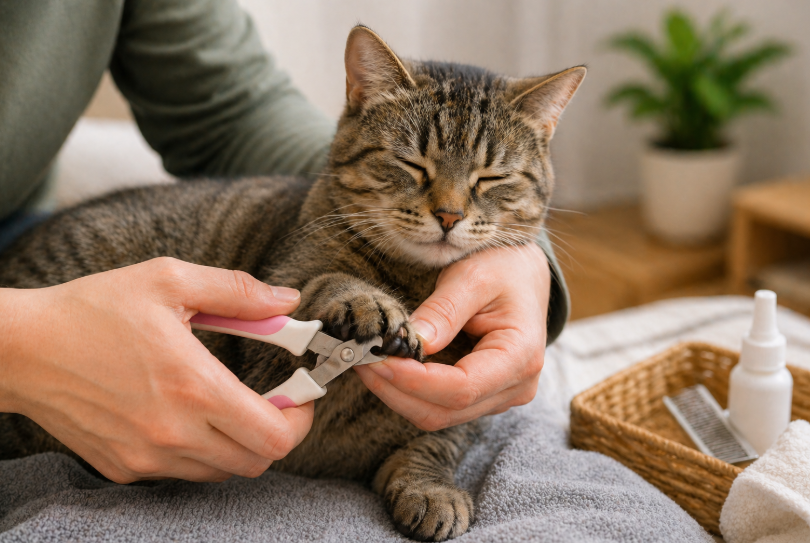
Learning how to trim cat nails without aggression is an essential skill for every cat owner who wants to maintain their pet’s health while avoiding stress and conflict. Nail trimming is often one of the most challenging grooming tasks, especially if your cat is sensitive to handling. However, when done correctly, it becomes a simple and calm routine rather than a stressful struggle.
Many cats react defensively because they feel restrained or uncomfortable, not because they are naturally aggressive. Therefore, understanding how to trim cat nails without aggression begins with creating a sense of safety and trust. With patience, the right tools, and a gentle approach, you can turn nail trimming into a positive experience for both you and your cat.
Understand Why Cats Resist Nail Trimming
Before you try to trim cat nails without aggression, it is important to understand why cats resist the process. Most cats dislike having their paws handled because it makes them feel vulnerable. Additionally, if they have had a painful or rushed experience in the past, they may associate nail trimming with discomfort.
Because of this, even calm cats can react suddenly. They may pull away, twitch their tails, or vocalize. These reactions are not signs of stubbornness but signals of stress. When you recognize these behaviors early, you can adjust your approach and prevent escalation.
By understanding the root cause of resistance, you are better prepared to trim cat nails without aggression while keeping your cat calm and cooperative.
Create A Calm And Safe Environment
A peaceful environment plays a major role when you trim cat nails without aggression. Choose a quiet space where your cat feels comfortable and secure. Avoid loud noises, sudden movements, or unfamiliar surroundings that may increase anxiety.
Lighting should be soft but clear enough to see the nails properly. At the same time, placing a towel or soft mat under your cat provides stability. This helps your cat feel grounded and less likely to panic.
Consistency also matters. If you trim your cat’s nails in the same place each time, your cat will begin to recognize the routine. Over time, this familiarity reduces fear and makes it easier to trim cat nails without aggression.
Start With Gentle Paw Handling
Before you even pick up nail clippers, focus on handling your cat’s paws. This step is essential if you want to trim cat nails without aggression successfully. Begin by gently touching your cat’s legs and slowly moving toward the paws.
Keep sessions short and relaxed. If your cat pulls away, do not force contact. Instead, try again later. This gradual approach helps your cat become comfortable with paw handling.
Once your cat tolerates touch, gently press the paw to extend the claws. Practice this movement without trimming at first. By doing so, you build familiarity and reduce stress, which is key to trim cat nails without aggression.
Choose The Right Nail Trimming Tools
The tools you use can make a significant difference when you trim cat nails without aggression. High-quality nail clippers designed specifically for cats provide better control and reduce the risk of injury.
Avoid dull or oversized clippers, as they can crush the nail rather than cut it cleanly. This can cause discomfort and make your cat more resistant. Instead, choose sharp, well-sized clippers that allow precise trimming.
Additionally, having styptic powder nearby is a good precaution. While accidents are rare, being prepared helps you stay calm. When you feel confident, it becomes easier to trim cat nails without aggression.
Use Positive Reinforcement During The Process
Positive reinforcement is one of the most effective ways to trim cat nails without aggression. Reward your cat with treats, gentle praise, or petting during and after the session. This creates a strong association between nail trimming and positive experiences.
Timing is important. Offer rewards immediately after calm behavior so your cat understands what is being encouraged. Over time, your cat will begin to tolerate the process more willingly.
Consistency strengthens this habit. When every session includes rewards, your cat starts to expect something positive. This makes it much easier to trim cat nails without aggression in the long run.
Trim Slowly And Carefully
Rushing is one of the most common mistakes when you trim cat nails without aggression. Instead, take a slow and steady approach. Trim one or two nails at a time if needed, rather than trying to finish all at once.
Focus on cutting only the sharp tip of the nail. Avoid the quick, which is the sensitive inner part. Cutting too close can cause pain and lead to negative reactions.
If your cat becomes restless, pause the session. Continuing despite signs of stress can make future attempts more difficult. By trimming gradually, you maintain a calm experience and successfully trim cat nails without aggression.
Recognize Signs Of Stress Early
Understanding your cat’s body language is crucial when you trim cat nails without aggression. Early signs of stress include tail flicking, flattened ears, or sudden stillness. These signals indicate that your cat is becoming uncomfortable.
When you notice these signs, stop immediately and allow your cat to relax. Ignoring these cues can lead to scratching or biting. Therefore, responding early helps prevent escalation.
By paying attention to these signals, you create a safer environment and improve your ability to trim cat nails without aggression over time.
Keep Sessions Short And Consistent
Short sessions are far more effective than long ones when you trim cat nails without aggression. Aim for just a few minutes at a time, especially if your cat is new to the process. Gradually increase the duration as your cat becomes more comfortable.
Consistency is equally important. Regular trimming prevents nails from becoming too long, which makes the process easier. When trimming becomes part of a routine, your cat is less likely to resist.
Additionally, ending each session on a positive note helps reinforce good behavior. This approach ensures that your cat remains calm and cooperative during future sessions.
Use Gentle Restraint When Necessary
Sometimes, a small amount of restraint is needed to trim cat nails without aggression. However, it should always be gentle and never forceful. Wrapping your cat in a soft towel can provide a sense of security while limiting movement.
This method, often called a “cat burrito,” helps you maintain control without causing stress. Make sure your cat can breathe comfortably and does not feel trapped.
If your cat resists strongly, stop and try again later. Gentle restraint should support the process, not replace patience and trust.
Know When To Seek Professional Help
There are situations where trimming at home may not be the best option. If your cat consistently reacts aggressively, it may be safer to seek professional help. Groomers and veterinarians have experience handling difficult cases.
In some cases, underlying health issues may cause sensitivity. A professional can assess whether discomfort is contributing to the problem. Addressing these issues can make it easier to trim cat nails without aggression in the future.
Seeking help is not a failure. Instead, it ensures your cat receives proper care without unnecessary stress or risk.
Conclusion
Learning how to trim cat nails without aggression takes patience, understanding, and consistency. While it may seem challenging at first, small changes in your approach can make a significant difference. By creating a calm environment, using the right tools, and reinforcing positive behavior, you can turn nail trimming into a manageable routine.
Over time, your cat will begin to trust the process and respond more calmly. Instead of a stressful task, nail trimming becomes an opportunity to strengthen your bond. With the right strategy, you can confidently trim cat nails without aggression while keeping your cat safe and comfortable.
FAQ
- How often should I trim my cat’s nails?
Most cats need nail trimming every two to four weeks, depending on their activity level. - What if my cat refuses to let me touch its paws?
Start with gentle handling and gradually build comfort before attempting to trim nails. - Can I use human nail clippers for cats?
It is better to use clippers designed for cats, as they provide more control and safety. - What should I do if I cut the nail too short?
Apply styptic powder to stop bleeding and remain calm to avoid stressing your cat. - Is it okay to trim only a few nails at a time?
Yes, trimming a few nails per session can reduce stress and make the process easier.
