
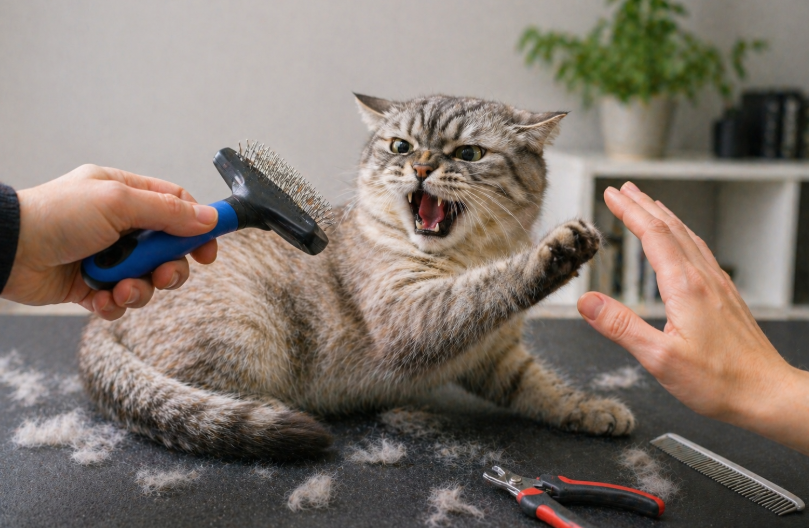
Understanding the grooming mistakes cat aggression is linked to can completely change how you approach grooming your pet. While many owners believe aggression happens without warning, it is often triggered by avoidable errors. Cats react strongly to discomfort, fear, and lack of control, which means even small mistakes can lead to defensive behavior.
When you recognize the grooming mistakes cat aggression tends to follow, you can prevent stress before it builds. Instead of reacting to aggression, you learn how to avoid triggering it in the first place. With the right awareness and adjustments, grooming can become a calm and manageable routine rather than a stressful experience.
Rushing Through Grooming Sessions
One of the most common grooming mistakes cat aggression develops from is rushing. Many owners try to finish grooming quickly, especially if their cat seems impatient. However, fast movements and sudden handling often overwhelm cats.
Cats need time to adjust to touch and tools. When you move too quickly, your cat may feel threatened and react defensively. This is especially true during tasks like brushing or nail trimming.
Instead, slow down and focus on gentle, steady movements. By taking your time, you reduce stress and avoid one of the biggest grooming mistakes cat aggression is caused by. A calm pace helps your cat feel safe and more willing to cooperate.
Ignoring Early Warning Signs
Another major reason grooming mistakes cat aggression occurs is ignoring your cat’s body language. Cats rarely attack without warning. They communicate discomfort through subtle signals such as tail flicking, flattened ears, or tense posture.
When these signs are ignored, stress builds quickly. Eventually, your cat may lash out to stop the situation. This reaction is not sudden but a result of missed signals.
Paying attention to these cues allows you to pause before aggression escalates. By responding early, you prevent the situation from worsening. This awareness is essential to avoid grooming mistakes cat aggression is commonly linked to.
Using The Wrong Grooming Tools
Using improper tools is another factor behind grooming mistakes cat aggression often follows. Brushes that pull on fur or clippers that cause discomfort can make grooming painful.
When your cat associates tools with pain, resistance increases. Even seeing the tool may trigger stress. This creates a cycle where grooming becomes more difficult each time.
Choosing high-quality, gentle tools makes a significant difference. Soft brushes and properly sized clippers reduce discomfort and improve control. By using the right equipment, you eliminate one of the key grooming mistakes cat aggression develops from.
Forcing Your Cat To Stay Still
Forceful restraint is one of the most damaging grooming mistakes cat aggression results from. While it may seem necessary to hold your cat in place, it often increases fear and resistance.
Cats value control, so being held tightly can feel threatening. When they cannot escape, they may react aggressively to protect themselves. This response is instinctive and not a sign of bad behavior.
Instead of forcing your cat, use gentle handling and allow breaks when needed. Giving your cat some control helps them feel safer. Avoiding this mistake is critical when addressing grooming mistakes cat aggression is connected to.
Grooming In A Stressful Environment
Environment plays a major role in grooming behavior, yet it is often overlooked. Noisy or chaotic surroundings are among the grooming mistakes cat aggression can be triggered by. Loud sounds, bright lights, or distractions can increase anxiety.
When your cat feels overwhelmed, even gentle grooming can become stressful. This makes defensive reactions more likely. Creating a calm environment helps reduce these triggers.
Choose a quiet space with minimal distractions. Use soft lighting and familiar surfaces to create comfort. By improving the environment, you avoid one of the most common grooming mistakes cat aggression is influenced by.
Skipping Regular Grooming Sessions
Inconsistency is another factor behind grooming mistakes cat aggression often involves. When grooming is done irregularly, it becomes unfamiliar and stressful for your cat.
Long gaps between sessions can also lead to tangles or overgrown nails. These issues make grooming more uncomfortable, increasing the chance of aggressive reactions.
Regular, short sessions help your cat become familiar with the process. This reduces fear and builds tolerance over time. Consistency is key to avoiding grooming mistakes cat aggression is commonly tied to.
Handling Sensitive Areas Too Quickly
Sensitive areas such as the belly, paws, and tail often trigger reactions. One of the grooming mistakes cat aggression frequently results from is touching these areas too soon.
Cats are naturally protective of these spots. If you approach them without preparation, your cat may feel threatened. This can lead to scratching or biting.
Start with areas your cat enjoys, such as the head or back. Gradually work toward more sensitive areas as your cat becomes comfortable. This approach helps prevent grooming mistakes cat aggression is caused by.
Using Loud Or Sudden Movements
Sudden movements and loud noises are another cause of grooming mistakes cat aggression. Cats are highly sensitive to motion and sound, so unexpected actions can startle them.
For example, quickly reaching for a tool or dropping an object nearby can trigger fear. This fear often leads to defensive behavior. Even small actions can have a big impact.
Move slowly and maintain a calm presence. Keep your movements predictable and controlled. By doing so, you reduce stress and avoid grooming mistakes cat aggression is linked to.
Neglecting Positive Reinforcement
Failing to reward good behavior is one of the less obvious grooming mistakes cat aggression can develop from. Without positive reinforcement, your cat has no reason to associate grooming with something good.
When grooming only involves discomfort or restraint, your cat may begin to resist more strongly. Over time, this leads to increased aggression.
Reward calm behavior with treats, praise, or play. This creates a positive association and encourages cooperation. Consistent reinforcement helps prevent grooming mistakes cat aggression often follows.
Continuing After Your Cat Shows Stress
Knowing when to stop is just as important as knowing how to groom. One of the most critical grooming mistakes cat aggression stems from is continuing despite clear signs of stress.
When your cat becomes tense or vocal, it is a signal to pause. Ignoring these signs can lead to escalation and damage trust. Pushing through the session often makes future grooming more difficult.
Instead, end the session calmly and try again later. Short, positive sessions are far more effective. This approach helps you avoid grooming mistakes cat aggression is strongly associated with.
Lack Of Patience During Training
Training takes time, yet impatience is one of the grooming mistakes cat aggression frequently results from. Expecting immediate results can lead to frustration and rushed handling.
Cats need gradual exposure to grooming. Skipping steps or moving too quickly can create fear. This fear often turns into defensive behavior.
By staying patient and consistent, you allow your cat to adapt at their own pace. Progress may be slow, but it leads to lasting results. Avoiding impatience helps reduce grooming mistakes cat aggression develops from.
Not Adjusting To Your Cat’s Personality
Every cat is different, yet many owners use the same approach for all cats. This is another reason grooming mistakes cat aggression occurs. What works for one cat may not work for another.
Some cats are more sensitive and require shorter sessions and gentler handling. Others may tolerate longer grooming sessions. Understanding your cat’s personality helps you tailor your approach.
By adapting your method, you create a more comfortable experience. This reduces stress and prevents grooming mistakes cat aggression is influenced by.
Conclusion
Recognizing the grooming mistakes cat aggression is connected to is the first step toward creating a safer and more positive grooming routine. While aggression can feel difficult to manage, it is often preventable with the right approach.
By slowing down, paying attention to your cat’s signals, and creating a calm environment, you can reduce stress significantly. Small changes in technique and consistency make a big difference over time.
Ultimately, grooming should be a bonding experience, not a struggle. When you avoid the grooming mistakes cat aggression develops from, you build trust and create a routine your cat can accept. With patience and understanding, grooming becomes easier, safer, and far more rewarding for both of you.
FAQ
- Why does my cat become aggressive during grooming?
This often happens due to fear, discomfort, or negative past experiences. - How can I prevent stress during grooming sessions?
Use gentle handling, watch for warning signs, and keep sessions short. - What tools should I avoid using on my cat?
Avoid harsh or low-quality tools that pull or cause discomfort. - Is it okay to stop grooming midway?
Yes, stopping when your cat shows stress helps prevent escalation. - How long does it take to improve grooming behavior?
With consistency and patience, most cats improve over several weeks.
