
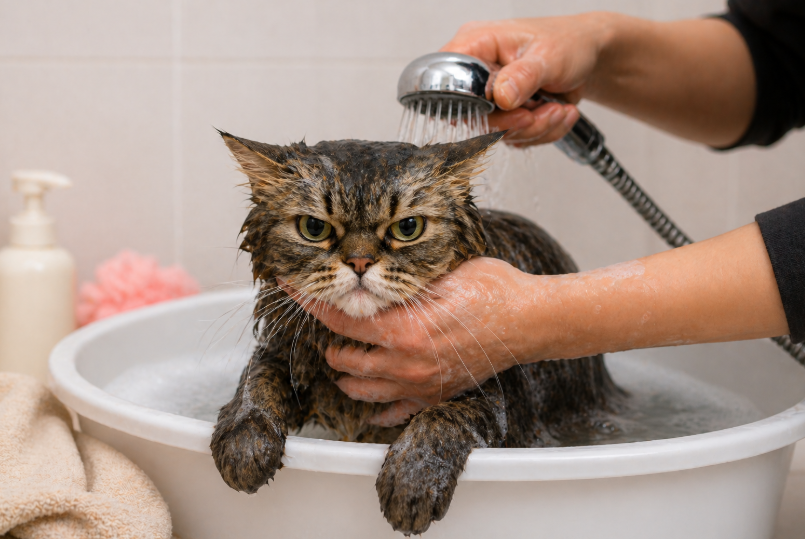
Learning how to bathe aggressive cat safely is essential for owners dealing with stress, resistance, or defensive behavior during bath time. While most cats dislike water, aggression usually comes from fear, discomfort, or past negative experiences. Therefore, the goal is not just to clean your cat but to create a safe, calm process that reduces anxiety and prevents injury.
When you bathe aggressive cat safely, preparation becomes just as important as the bath itself. A rushed or unplanned approach can quickly escalate the situation. However, with patience, the right setup, and a clear routine, you can turn a difficult task into a controlled and manageable experience.
Understand Why Cats Become Aggressive During Baths
Before you attempt to bathe aggressive cat safely, it helps to understand why aggression happens. Most cats feel vulnerable around water because it limits their movement and control. Additionally, unfamiliar sounds, slippery surfaces, and sudden handling can trigger panic.
Cats also remember negative experiences. If your cat had a stressful bath in the past, they may react defensively even before water is introduced. Because of this, recognizing emotional triggers is key.
By understanding these causes, you can adjust your approach and reduce stress. This awareness is one of the first steps to bathe aggressive cat safely without escalating fear or aggression.
Prepare Everything Before Starting
Preparation is critical when you want to bathe aggressive cat safely. Before bringing your cat into the bathing area, gather all supplies, including shampoo, towels, and a cup or sprayer for rinsing. Having everything ready prevents unnecessary delays.
Choose a quiet location with minimal distractions. A sink or small tub often works better than a large bathtub, as it provides more control. Additionally, place a non-slip mat or towel at the bottom to prevent slipping.
Water temperature should be lukewarm. Extreme temperatures can cause discomfort and increase stress. By setting up properly, you create a controlled environment that helps you bathe aggressive cat safely from start to finish.
Keep The Environment Calm And Controlled
Your environment plays a major role when you bathe aggressive cat safely. Loud noises, sudden movements, or unfamiliar people can increase anxiety. Therefore, choose a quiet time when your home is calm.
Close doors to limit distractions and prevent escape. Soft lighting can also help create a more relaxed atmosphere. If possible, use calming aids such as pheromone sprays before the session.
Additionally, stay calm yourself. Cats are highly sensitive to your energy. When you remain relaxed, your cat is more likely to mirror that behavior. This calm approach makes it easier to bathe aggressive cat safely without triggering defensive reactions.
Use Gentle Restraint Without Force
Handling your cat properly is essential when you bathe aggressive cat safely. Avoid forceful restraint, as it increases fear and resistance. Instead, use gentle control techniques that provide security without causing stress.
Wrapping your cat in a towel before placing them in the water can help limit movement. This method, often called a “cat burrito,” creates a sense of safety while protecting you from scratches.
Support your cat’s body at all times. A secure hold prevents sudden movements and helps your cat feel more stable. By using gentle restraint, you maintain control while still respecting your cat’s comfort.
Introduce Water Gradually
Sudden exposure to water can trigger panic, so it is important to introduce it slowly when you bathe aggressive cat safely. Start by wetting your cat’s paws and gradually move upward. Avoid pouring water directly over the head.
Use a cup or low-pressure sprayer to control the flow. This prevents overwhelming your cat and allows you to adjust as needed. Keep the water level shallow to maintain a sense of safety.
Speak softly and move slowly throughout the process. Gradual exposure helps your cat adjust and reduces the chance of aggressive reactions. This step is crucial when you aim to bathe aggressive cat safely.
Apply Shampoo Carefully And Efficiently
Once your cat is wet, apply shampoo gently and work it into the coat with slow, controlled movements. Use a shampoo specifically designed for cats to avoid irritation.
Focus on one area at a time and avoid sensitive spots such as the face and ears. Working in sections allows you to stay organized and prevents unnecessary handling.
Keep the process as brief as possible. Prolonged bathing can increase stress and make your cat more reactive. By staying efficient, you can bathe aggressive cat safely while minimizing discomfort.
Rinse Thoroughly Without Causing Stress
Rinsing is just as important as washing when you bathe aggressive cat safely. Leftover shampoo can irritate the skin, so make sure to rinse thoroughly.
Use the same gentle method you used to wet your cat. Keep the water flow steady and controlled. Avoid sudden splashes or loud sounds that could startle your cat.
If your cat becomes restless, pause briefly and allow them to settle. Staying patient ensures that rinsing remains calm and manageable. A careful rinse completes the cleaning process without adding stress.
Dry Your Cat Gently And Calmly
Drying is the final step when you bathe aggressive cat safely, and it should be handled with care. Immediately wrap your cat in a soft towel to absorb excess water. This also provides warmth and comfort.
Gently pat the fur rather than rubbing it. Rubbing can cause tangles and discomfort. If your cat tolerates it, you can use a low-noise dryer on a low setting. However, many cats prefer towel drying.
Keep your cat in a warm, quiet space until fully dry. This helps them relax and recover from the experience. A calm drying process ensures that you bathe aggressive cat safely from start to finish.
Use Positive Reinforcement After The Bath
Positive reinforcement is essential when you bathe aggressive cat safely. Reward your cat with treats, praise, or gentle petting after the session. This helps create a positive association with bathing.
Timing matters. Offer rewards immediately so your cat connects the calm behavior with the reward. Over time, this reduces resistance and improves cooperation.
Consistency strengthens this effect. When every bath ends positively, your cat becomes less fearful. This makes it easier to bathe aggressive cat safely in future sessions.
Know When To Take Breaks Or Stop
Even with preparation, there may be times when your cat becomes too stressed. Recognizing when to stop is important when you bathe aggressive cat safely. Signs such as intense struggling, loud vocalization, or attempts to escape indicate high stress.
If this happens, pause the session and allow your cat to calm down. Continuing despite these signals can damage trust and increase aggression.
Short sessions are often more effective than long ones. If needed, complete the bath in stages. Respecting your cat’s limits helps maintain a safe and positive experience.
When Professional Help Is The Best Option
In some cases, bathing at home may not be safe. If your cat consistently reacts aggressively, seeking professional help is a wise choice. Groomers and veterinarians have the experience and tools needed to handle difficult situations.
Additionally, aggression may be linked to pain or health issues. A professional evaluation ensures that your cat is comfortable and safe. In certain situations, sedation may be recommended.
Knowing when to seek help is part of responsible care. It ensures that you bathe aggressive cat safely without risking injury to yourself or your pet.
Conclusion
Learning how to bathe aggressive cat safely requires patience, preparation, and a calm approach. While the process can be challenging, the right techniques make a significant difference. By understanding your cat’s behavior, creating a safe environment, and using gentle handling, you can reduce stress and improve cooperation.
Over time, consistent and positive experiences help your cat become more tolerant of baths. Instead of a stressful struggle, bathing can become a manageable routine. With the right strategy, you can confidently bathe aggressive cat safely while keeping both you and your cat protected.
FAQ
- How often should I bathe my cat?
Most cats only need occasional baths unless they get dirty or have specific skin conditions. - What if my cat scratches during a bath?
Use gentle restraint and protective clothing, and stop if the stress becomes too high. - Can I use human shampoo on my cat?
No, always use shampoo specifically formulated for cats to avoid irritation. - Is it better to use a sink or bathtub?
A sink or small tub usually provides better control and feels less overwhelming for cats. - When should I avoid bathing my cat at home?
If your cat shows extreme aggression or stress, consider professional grooming or veterinary help.
