
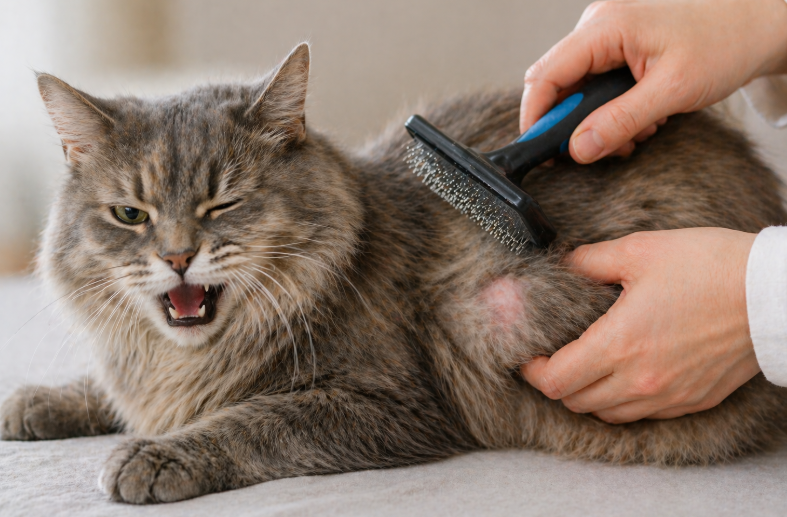
Recognizing cat pain during grooming is essential if you want to keep your pet safe, calm, and comfortable during routine care. While grooming is necessary for maintaining a healthy coat and skin, it can sometimes cause discomfort that leads to resistance or even aggression. Many owners assume their cat is simply being difficult, but in reality, pain is often the underlying issue.
Because cats are experts at hiding discomfort, they rarely show obvious signs right away. Instead, they rely on subtle signals to communicate how they feel. If these signals are ignored, grooming sessions can quickly become stressful for both you and your cat. Therefore, understanding cat pain during grooming helps you respond appropriately and prevent long-term issues.
Understanding Why Grooming Can Cause Pain
To fully understand cat pain during grooming, it is important to look at the possible causes. One of the most common reasons is tangled or matted fur. When a brush pulls on knots, it can create significant discomfort, especially for long-haired cats.
In addition, sensitive skin can make even gentle brushing feel unpleasant. Some cats naturally have more delicate skin, while others may develop irritation due to allergies or environmental factors. Because of this, what feels normal to you may feel painful to your cat.
Moreover, improper grooming techniques can contribute to the problem. Using the wrong tools or applying too much pressure increases the risk of discomfort. Therefore, identifying these causes is the first step in reducing cat pain during grooming and creating a better experience.
Early Warning Signs Of Discomfort
Recognizing early signs of cat pain during grooming helps prevent the situation from escalating. Cats rarely react aggressively without warning, so paying attention to small changes is key.
For example, a sudden stiffening of the body often indicates discomfort. Your cat may also flatten their ears or flick their tail repeatedly. These subtle movements signal that something is wrong.
In addition, your cat may try to move away or shift position frequently. This behavior shows they are attempting to avoid the source of discomfort. If you notice these signs, it is important to pause immediately. Responding early helps prevent fear and reduces the chance of aggression.
Behavioral Changes That Signal Pain
Beyond physical cues, behavioral changes can reveal cat pain during grooming. A cat that normally tolerates grooming but suddenly becomes resistant may be experiencing discomfort.
For instance, growling, hissing, or swatting are clear signs that your cat is no longer comfortable. These reactions are not acts of defiance. Instead, they are protective responses to pain.
Some cats may also freeze completely. While this may seem calm, it often indicates high stress. In this state, your cat may feel overwhelmed and unable to react normally.
By recognizing these behavioral shifts, you can adjust your approach and prevent further discomfort.
Common Physical Causes Of Grooming Pain
Several physical conditions can lead to cat pain during grooming. One of the most common is matted fur, which pulls on the skin and creates tension. Removing these mats without proper care can be painful.
Skin infections or irritations are another factor. Conditions such as dermatitis can make the skin sensitive to touch. As a result, even gentle grooming can cause discomfort.
In addition, joint pain or injuries may affect how your cat reacts. Older cats, in particular, may have arthritis that makes certain positions uncomfortable. When handled during grooming, they may react defensively to avoid pain.
Identifying these causes allows you to address the root of the problem rather than just the symptoms.
The Role Of Grooming Tools And Techniques
The tools you use play a significant role in preventing cat pain during grooming. Brushes that are too harsh or not suited to your cat’s coat type can cause irritation. Therefore, selecting the right tool is essential.
Soft brushes or combs designed for your cat’s specific fur type provide a gentler experience. In addition, brushing in the direction of hair growth reduces pulling and discomfort.
Technique also matters. Applying light pressure and using slow, smooth strokes helps minimize pain. Rushing through grooming or forcing the process increases stress and discomfort.
By improving both tools and technique, you can greatly reduce cat pain during grooming and create a more positive routine.
How To Make Grooming More Comfortable
Reducing cat pain during grooming requires a thoughtful and gradual approach. Starting with short sessions helps your cat adjust without feeling overwhelmed. Over time, you can slowly increase the duration as your cat becomes more comfortable.
In addition, choosing the right time is important. Grooming when your cat is relaxed, such as after a meal or play session, can improve cooperation. Avoid grooming when your cat is already stressed or agitated.
Positive reinforcement also plays a key role. Offering treats or praise after each session helps create a positive association. This encourages your cat to tolerate grooming more willingly.
By combining these strategies, you create a routine that minimizes discomfort and builds trust.
When To Stop A Grooming Session
Knowing when to stop is crucial when dealing with cat pain during grooming. Continuing despite clear signs of discomfort can damage trust and make future sessions more difficult.
If your cat shows signs such as hissing, swatting, or trying to escape, it is best to stop immediately. Taking a break allows your cat to calm down and prevents escalation.
In addition, stopping early reinforces a sense of control. Your cat learns that grooming does not have to be a negative experience. Over time, this reduces anxiety and improves cooperation.
Short, positive sessions are far more effective than long, stressful ones.
When To Seek Veterinary Help
In some cases, cat pain during grooming may indicate a deeper health issue. If your cat suddenly becomes sensitive to touch or reacts more aggressively than usual, a veterinary check is recommended.
A veterinarian can identify underlying conditions such as skin infections, injuries, or joint problems. Early diagnosis helps prevent further discomfort and ensures proper treatment.
In addition, professional groomers may be helpful for difficult cases. They have experience handling sensitive cats and can use specialized techniques to reduce stress.
Seeking help when needed ensures your cat’s safety and improves their overall wellbeing.
Building Long-Term Grooming Trust
Building trust is essential for reducing cat pain during grooming over time. Cats respond well to consistency, so maintaining a regular routine helps them feel secure.
Starting with gentle handling and gradually introducing grooming tools creates a positive experience. In addition, respecting your cat’s boundaries prevents unnecessary stress.
Over time, your cat learns that grooming is safe and predictable. While some cats may never fully enjoy grooming, they can learn to tolerate it calmly.
This trust-based approach leads to better cooperation and a more relaxed grooming routine.
Conclusion
Understanding cat pain during grooming allows you to approach grooming with patience and awareness. Instead of forcing the process, recognizing signs of discomfort helps you adjust your methods and create a safer experience. By focusing on gentle techniques, proper tools, and consistent routines, you can reduce pain and build trust.
With time and attention, grooming becomes less stressful and more manageable. Your cat feels more comfortable, and you gain confidence in your approach. Ultimately, preventing cat pain during grooming ensures a healthier and happier life for your pet.
FAQ
- How can I tell if my cat is in pain while grooming?
Look for signs such as stiff posture, tail flicking, and attempts to escape. - What causes discomfort during grooming?
Common causes include matted fur, sensitive skin, and improper grooming techniques. - Should I continue grooming if my cat reacts negatively?
No, it is best to stop and allow your cat to calm down before trying again. - Can grooming tools cause pain to cats?
Yes, using the wrong tools or applying too much pressure can lead to discomfort. - When should I consult a veterinarian about grooming issues?
If your cat shows sudden sensitivity or aggressive reactions, a vet visit is recommended.
