
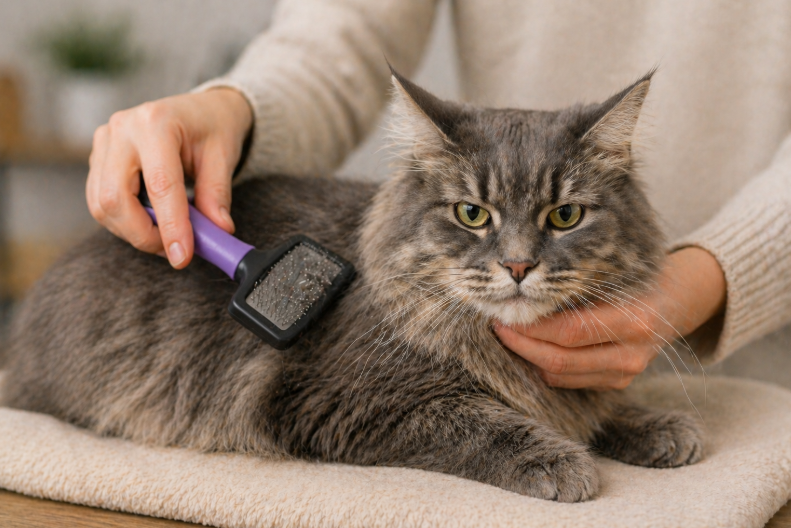
Learning how to train aggressive cats grooming is one of the most important steps you can take if your cat reacts negatively to handling, brushing, or nail care. While aggression during grooming can feel intimidating, it is usually rooted in fear, discomfort, or confusion. Therefore, the goal is not to force compliance but to build trust and create a safe, predictable experience your cat can gradually accept.
When you train aggressive cats grooming properly, you shift the focus from control to understanding. Cats are highly sensitive animals, and even small changes in approach can dramatically improve their behavior. With patience, consistency, and the right techniques, even the most resistant cats can learn to tolerate and eventually accept grooming.
Understand The Root Cause Of Aggression
Before you begin to train aggressive cats grooming, it is essential to understand why the behavior happens. Most cats do not act aggressively without reason. Instead, they react when they feel threatened, uncomfortable, or overwhelmed.
For example, brushing through knots, holding them too tightly, or using unfamiliar tools can trigger defensive reactions. In addition, past negative experiences often shape how your cat responds. If grooming once caused pain or fear, your cat may expect the same outcome again.
Because of this, identifying triggers is key. Once you understand what causes stress, you can adjust your approach. This awareness is the foundation when you train aggressive cats grooming in a safe and effective way.
Start With Trust Before Grooming
Building trust is the most important step when you train aggressive cats grooming successfully. Without trust, any grooming attempt will feel threatening to your cat. Therefore, begin with simple interactions that do not involve tools.
Spend time petting your cat gently in areas they enjoy, such as the head or back. Keep sessions short and calm. If your cat moves away, respect their space and try again later.
Over time, these positive interactions help your cat feel safe around you. As trust grows, your cat becomes more open to handling. This gradual process makes it much easier to train aggressive cats grooming without resistance.
Introduce Handling In Small Steps
Handling is a critical part of grooming, so it must be introduced slowly when you train aggressive cats grooming. Start by touching your cat’s body in short, gentle sessions. Gradually include areas like the legs, paws, and tail.
Do not rush this process. If your cat shows signs of discomfort, pause immediately. Forcing contact can damage trust and increase aggression.
Instead, build tolerance step by step. Each calm interaction reinforces positive behavior. Over time, your cat will become more comfortable with touch, which is essential when you train aggressive cats grooming effectively.
Use Positive Reinforcement Consistently
Positive reinforcement is one of the most powerful tools when you train aggressive cats grooming. Reward calm behavior with treats, praise, or gentle petting. This helps your cat associate grooming with positive outcomes.
Timing is important. Offer rewards immediately after your cat remains calm or cooperative. This helps them understand what behavior is desired.
Consistency also matters. When every session includes rewards, your cat begins to expect something positive. This reduces fear and encourages cooperation. With regular reinforcement, you can successfully train aggressive cats grooming in a way that feels safe and rewarding.
Introduce Grooming Tools Gradually
Tools can be intimidating for cats, so they must be introduced carefully when you train aggressive cats grooming. Start by allowing your cat to see and smell the tool without using it.
Place the brush or comb near your cat during relaxed moments. Let them investigate it at their own pace. This reduces fear and builds familiarity.
Once your cat is comfortable, begin with very light contact. Use short, gentle strokes and focus on areas they enjoy. Gradually increase the duration as your cat becomes more relaxed. This slow introduction is key when you train aggressive cats grooming successfully.
Keep Sessions Short And Predictable
Long grooming sessions can overwhelm your cat, which is why short sessions are essential when you train aggressive cats grooming. Start with just a few minutes and gradually increase the time as your cat becomes more comfortable.
Consistency is also important. Try to groom your cat at the same time and in the same place. This creates a predictable routine that helps your cat feel secure.
Ending each session on a positive note is crucial. Even if you only complete a small task, finishing calmly reinforces good behavior. This approach helps you train aggressive cats grooming without creating stress or resistance.
Recognize Warning Signs Early
Cats rarely attack without warning. Learning to recognize these signals is essential when you train aggressive cats grooming. Common signs include tail flicking, flattened ears, and tense body posture.
Some cats may freeze or suddenly stop moving. This stillness often indicates rising stress. Vocal cues such as growling or hissing are also clear warnings.
When you notice these signs, stop immediately. Responding early prevents escalation and builds trust. By respecting your cat’s limits, you make it easier to train aggressive cats grooming over time.
Create A Calm Grooming Environment
The environment plays a major role when you train aggressive cats grooming. A noisy or chaotic space can increase anxiety and trigger defensive behavior. Therefore, choose a quiet and familiar location for grooming.
Use soft lighting and minimize distractions. A comfortable surface, such as a towel or mat, helps your cat feel stable. Familiar scents can also provide reassurance.
Additionally, your own behavior matters. Stay calm and move slowly. Cats are highly sensitive to energy, so your calmness helps them relax. A peaceful environment supports the process when you train aggressive cats grooming.
Break Tasks Into Manageable Steps
Trying to complete all grooming tasks at once can overwhelm your cat. Instead, break grooming into smaller steps when you train aggressive cats grooming. Focus on one task at a time, such as brushing or nail trimming.
For example, you can brush for a few minutes one day and trim nails another day. This gradual approach reduces stress and makes each task more manageable.
Small successes build confidence. Over time, your cat becomes more tolerant of each step. This method makes it easier to train aggressive cats grooming without triggering aggressive reactions.
Avoid Common Mistakes That Increase Aggression
Certain mistakes can make it harder to train aggressive cats grooming. One common issue is forcing your cat to stay still. Restraint without trust often increases fear and leads to defensive behavior.
Another mistake is rushing the process. Trying to complete grooming quickly can cause discomfort and stress. Instead, focus on gradual progress.
Using the wrong tools can also create problems. Brushes that pull or clippers that hurt can lead to negative associations. Always choose gentle, high-quality tools.
Finally, avoid punishment. Negative responses only increase fear and damage trust. A calm, patient approach is always more effective.
Stay Patient And Adjust Your Approach
Every cat is different, so flexibility is important when you train aggressive cats grooming. Some cats may adapt quickly, while others need more time. Observing your cat’s behavior helps you adjust your approach.
If something does not work, try a different method. For example, changing the timing, location, or tool can make a difference. Small adjustments often lead to big improvements.
Patience is key. Progress may be slow, but consistency will bring results. Over time, your cat will begin to feel more comfortable and less defensive during grooming.
Know When To Seek Professional Help
In some cases, training at home may not be enough. If aggression remains severe, it may be time to seek professional help. Groomers and veterinarians have experience handling difficult cases.
Additionally, underlying health issues may contribute to aggressive behavior. Pain or sensitivity can make grooming uncomfortable. A professional evaluation ensures your cat is healthy and comfortable.
Seeking help is a responsible step. It ensures that you can continue to train aggressive cats grooming safely without risking injury.
Conclusion
Learning how to train aggressive cats grooming takes time, patience, and a thoughtful approach. While aggression can feel challenging, it is usually a sign of fear or discomfort rather than stubbornness. By focusing on trust, gradual exposure, and positive reinforcement, you can create a safer and more comfortable grooming experience.
Over time, consistent effort leads to meaningful progress. Your cat becomes more relaxed, and grooming becomes less stressful. With the right approach, you can successfully train aggressive cats grooming and build a stronger, more trusting relationship with your pet.
FAQ
- Why does my cat react aggressively during grooming?
This often happens due to fear, discomfort, or past negative experiences. - How long does it take to improve grooming behavior?
It varies, but consistent training over weeks can show noticeable progress. - Can older cats still learn to accept grooming?
Yes, with patience and gradual training, older cats can adapt. - What is the best way to calm a cat before grooming?
Use gentle handling, a calm environment, and positive reinforcement. - When should I consider professional grooming help?
If your cat shows severe aggression or stress, a professional can help safely.
