
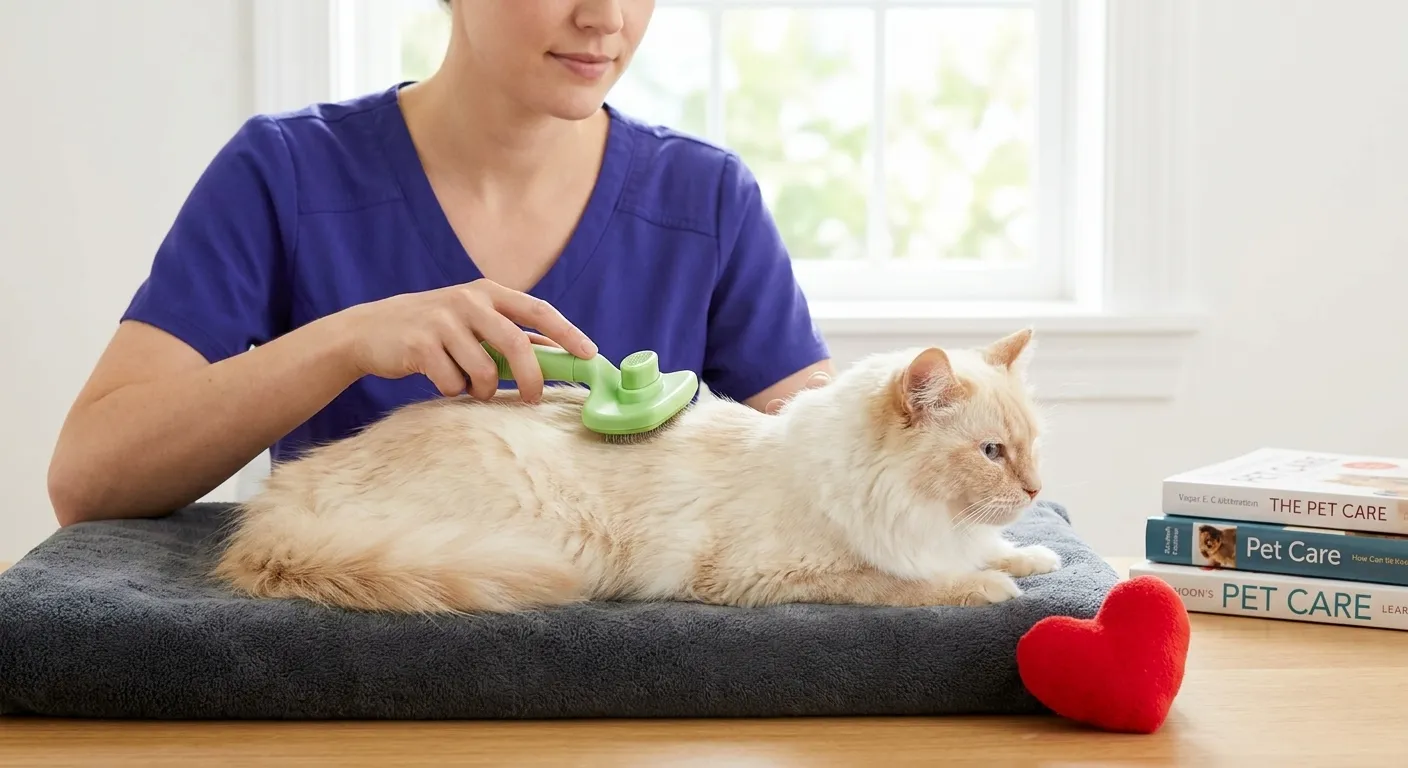
Understanding cat grooming needs starts here: cats are excellent self-groomers, yet many still need human help with mats, nails, ears and teeth. This guide walks through coat care, tools, life stages and when to call a professional — with links to primary veterinary sources throughout.
Disclaimer: This content is for informational purposes only and is not a substitute for professional veterinary advice, diagnosis or treatment. Always consult your veterinarian about your own cat.
Why grooming still matters
Self-grooming keeps many cats tidy, but long coats, senior joints, obesity and skin issues leave gaps. Gentle sessions help you spot mats, parasites, lumps and coat changes early. The VCA guide to grooming and coat care and International Cat Care’s grooming advice are solid starting points for how clinics frame coat care.
For coat health basics on our site, see indicators of healthy feline skin and coat.
Brushing for understanding cat grooming needs
Match tools to coat type after reading those primary pages: slicker or wide comb for long coats, rubber curry for many short coats. Work with the hair direction. Check armpits, belly and behind the ears where mats hide. Stop while your cat is still willing — short sessions beat forced marathons.
If mats sit tight against the skin, do not cut blindly with scissors. Ask a groomer or veterinarian so you do not nick the skin. Cornell’s A hairy dilemma page is useful background when coat and hairball questions overlap.
Bathing only when needed
Most cats do not need frequent baths. Bathe when your cat is visibly dirty, sticky, or when your veterinarian directs skin care. Use a feline shampoo, lukewarm water and a calm setup. Rinse thoroughly. Ask your vet before making baths a habit, since over-bathing can dry skin.
Nails, ears and teeth
Overgrown nails can snag and curl toward pads. Follow the trimming guidance on the VCA or International Cat Care pages, use cat clippers, and take only the clear tip. Keep styptic powder nearby. Introduce one or two nails at a time with treats, or ask your clinic to demonstrate.
Check ears for redness, odor or discharge — those signs mean call the vet. If cleaning is recommended, use a vet-approved cleaner on the outer ear only; never push cotton swabs deep into the canal.
Dental disease is common. The AVMA pet dental care page explains home brushing with pet toothpaste (never human toothpaste). Dental treats can help but do not replace what your veterinarian recommends. Book dental exams as part of routine care.
Coat types and life stages
- Long coats: more frequent gentle work to prevent mats — confirm cadence with your groomer and the primary pages above.
- Short coats: lighter brushing still reduces loose fur and hairballs.
- Seniors: less flexibility means more human help with hard-to-reach spots.
- Health limits: arthritis, obesity or skin disease change the plan — ask your vet before forcing positions.
Make grooming a positive habit
- Start young when you can.
- Keep sessions short.
- Reward calm behavior.
- Choose a quiet room.
- Stop if stress rises; try again later or book a professional.
Myths worth dropping
- Cats never need help — many do, especially long hair and seniors.
- All cats hate water equally — still, most rarely need baths.
- Grooming is only cosmetic — it is also a health check.
- Shaving stops shedding — coats also protect; ask a vet or groomer before a full clip.
A simple checklist for understanding cat grooming needs
- Read the VCA, International Cat Care, Cornell and AVMA pages linked above.
- Pick tools for this coat type.
- Schedule short brush sessions your cat will tolerate.
- Check nails; ask for a clinic demo if unsure.
- Inspect ears; call the vet for odor, redness or discharge.
- Start dental care per AVMA guidance and your vet’s plan.
- Book professional help for severe mats or high stress.
When to call the vet
Call about sudden coat loss, painful mats, limping after nail issues, ear odor, bad breath with drooling, or skin sores. Understanding cat grooming needs includes knowing when home care stops and clinical care starts.
Shared households and aftercare
Write who brushes, who checks nails and who books dental visits so the routine does not vanish between family members. Keep tools in one drawer. After a groomer or vet visit, write the exact instructions you heard and keep them on the fridge for a week.
If two sources disagree — a forum tip versus your veterinarian — keep the veterinarian’s plan.
Building a small home kit
Keep a slicker or curry brush, a wide comb, cat nail clippers, styptic powder, a towel and treats in one basket. Understanding cat grooming needs is easier when you are not hunting tools while your cat walks away.
In multi-cat homes, groom separately when you can and ask your vet how carefully to wash tools if skin disease is present.
Working with a professional groomer
Book a feline-experienced groomer when mats are severe or stress is high. Ask how they handle fearful cats and when they stop a session. Sedation decisions belong with your veterinarian, not a shop-floor guess.
Bring photos of problem mats and a short list of medications so the salon and your clinic share the same picture.
Seasonal shedding
Loose fur often rises with daylight and temperature changes. Increase gentle brushing during heavy shed stretches and vacuum soft furnishings so your cat is not re-ingesting piles of hair. Adapt the calendar without inventing medical claims.
Transport and quiet homecomings
Practice short carrier rides before salon days. After a visit, offer water, a quiet room and a clean litter box. Delay guests until your cat settles. Watch for redness where mats were removed and call the vet if skin looks sore.
What not to do
- Do not cut mats with kitchen scissors against the skin.
- Do not use human shampoo or human toothpaste.
- Do not force a full bath on a terrified cat without veterinary guidance.
- Do not treat salon wipe-downs as a substitute for veterinary dentistry.
Talking with your veterinarian
Bring photos and a short list of coat changes to the exam. Ask whether home care is enough or whether a clinic groom is safer. That conversation prevents booking the wrong setting when understanding cat grooming needs for a sensitive or senior cat.
Keep a one-page log of brush dates, nail trims and dental attempts. Patterns help your vet more than vague answers.
Insurance and records
Ask whether your pet insurance covers accidental injury during grooming and what documents they want. Write the answer rather than inventing coverage rules.
FAQ: understanding cat grooming needs
How often should I brush?
Follow coat-type guidance on the VCA and International Cat Care pages, then adjust to your cat’s tolerance and mat risk.
Do all cats need baths?
Usually no. Bath when dirty, sticky or when your vet directs skin care.
What tools do I need?
A coat-appropriate brush or comb, cat nail clippers, and a cat toothbrush with pet toothpaste if your vet supports home brushing.
Can I shave to stop shedding?
Ask a veterinarian or experienced groomer first. Regular brushing is the safer default for most cats.
What if my cat hates grooming?
Shorter sessions, better timing and professional help beat forcing a long battle.
The bottom line on understanding cat grooming needs
Understanding cat grooming needs is less about perfection and more about a calm weekly habit plus trusted sources you can show your vet.
This week, open the VCA grooming page, write three bullets for your cat’s coat type, and finish one short brush session on a treat while your cat is still relaxed. Repeat that short pattern on two calm evenings so the habit sticks without a struggle for understanding cat grooming needs at home this month without a fight today.
